

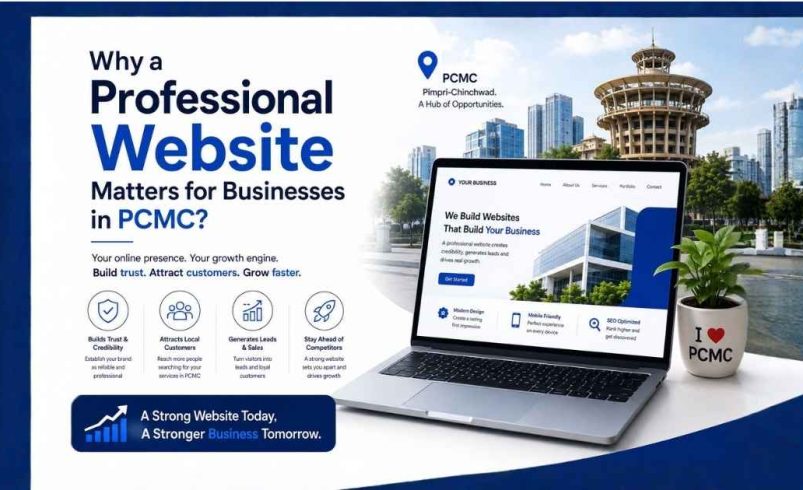
Summary – A professional website helps businesses in PCMC build credibility, improve local search visibility, attract potential customers, generate enquiries, and support long-term growth. A strong business website should be mobile-friendly, fast, easy to navigate, secure, search-engine optimized, and designed around customer needs. For businesses serving areas such as Pimpri, Chinchwad, Wakad, Nigdi, Bhosari, Ravet, and Punawale, a well-optimized website can become an important connection between local searches and real business enquiries.
For many customers, a website is one of the first places they visit before deciding whether to contact a business. They may find a company through Google, social media, a recommendation, or an online directory and then visit its website to check its services, experience, location, reviews, and contact details.
That makes a website more than an online brochure. It can function as a digital storefront, credibility builder, information hub, and lead-generation channel.
Why Does a Business in PCMC Need a Professional Website?
PCMC has a diverse business environment, including manufacturing companies, IT firms, healthcare providers, educational institutions, restaurants, retailers, real estate businesses, consultants, and professional service providers.
These businesses may have different customers, but they face a similar challenge: being visible when people are actively looking for their products or services.
A professional website gives a business a central online destination where customers can learn about the company and take action.
For example, someone searching for an industrial supplier in Bhosari may want product specifications and an enquiry form. A customer looking for a clinic in Pimpri may want services, doctor information, location, and appointment details.
The website should answer those questions quickly and clearly.
What Makes a Website Look Professional and Trustworthy?
Professional web design is not simply about attractive colours, animations, or modern graphics. A useful business website combines visual design with functionality, usability, technical performance, and clear communication.
Important elements include:
- Responsive mobile design
- Simple navigation
- Fast-loading pages
- Clear service or product information
- Professional images
- Easy-to-find contact details
- Strong calls to action
- Secure HTTPS
- Customer reviews and testimonials
- Relevant FAQs
- Search-friendly content
A visitor should not have to search through several pages to understand what a company does.
A simple structure such as What we offer → Who we serve → Why choose us → How to contact us can make the customer journey much easier.
How Does a Professional Website Build Business Credibility?
Imagine two local companies offering similar services.
Company A has an outdated website, broken links, unclear service information, and no recent project examples.
Company B has a clean website with detailed service pages, customer testimonials, case studies, business information, and straightforward contact options.
Even before speaking with either company, a potential customer is likely to feel more confident about Company B.
This is why website quality contributes to perceived credibility.
Businesses can strengthen trust by displaying genuine:
- Client testimonials
- Case studies
- Certifications
- Industry experience
- Project portfolios
- Business information
- Contact details
- Frequently asked questions
The goal is not to make exaggerated claims. It is to provide enough useful information for a visitor to make a confident decision.
How Can a Website Help PCMC Businesses Get Local Customers?
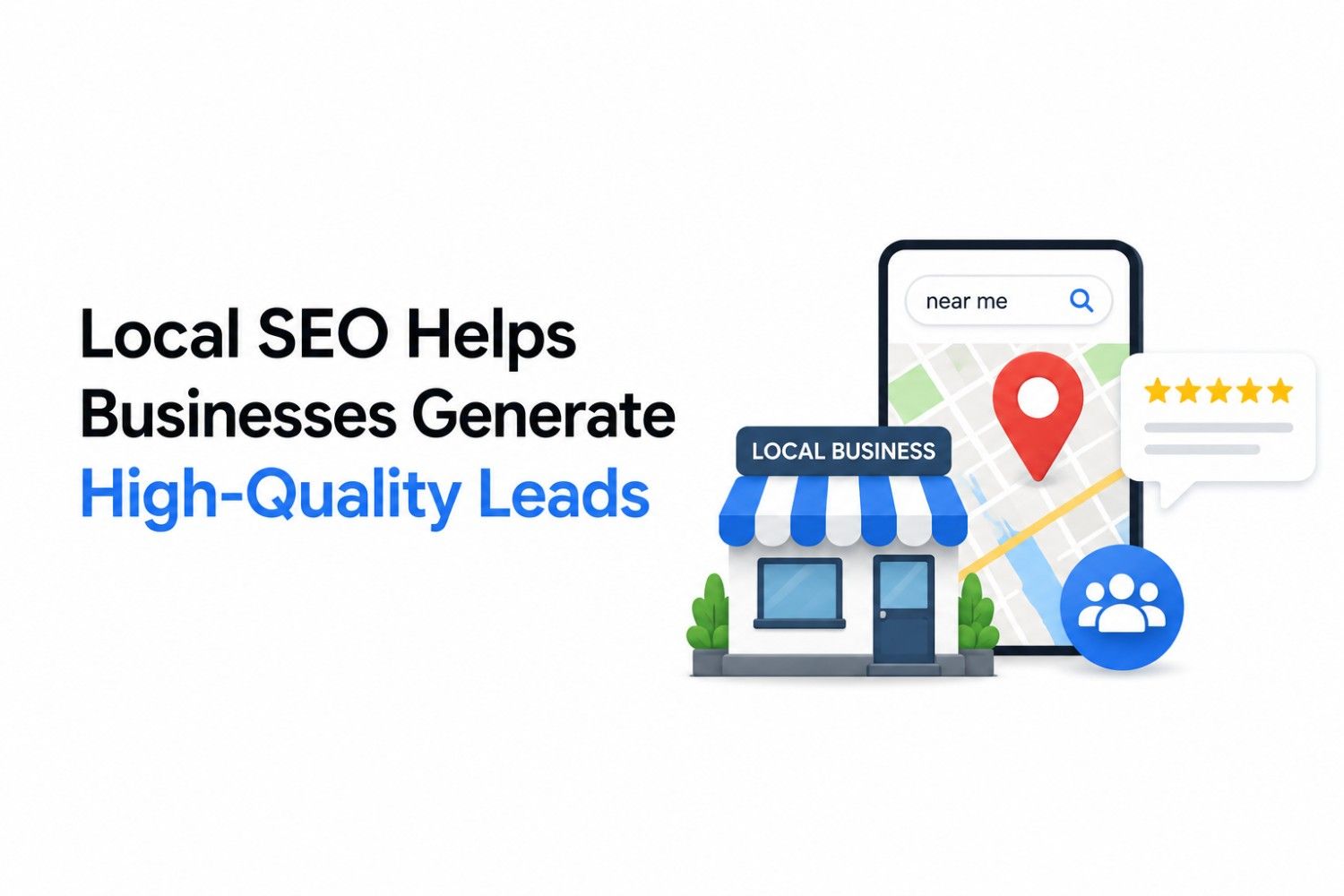
A website can support local SEO by helping search engines understand what a business offers and where it operates.
For example, a business serving Wakad, Chinchwad, Pimpri, Nigdi, Akurdi, Ravet, Punawale, Tathawade, Bhosari, or Moshi can create genuinely useful content around its services and relevant service areas.
Local optimization may include:
- Location-specific service pages
- Relevant local keywords
- Consistent business information
- Internal links
- Local business structured data
- Useful location information
- Customer reviews
- Local references and backlinks
However, adding a location name repeatedly is not a local SEO strategy.
A location page should provide something useful to people in that area, such as service availability, customer needs, directions, relevant projects, or practical information.
How Does Website Design Affect SEO?
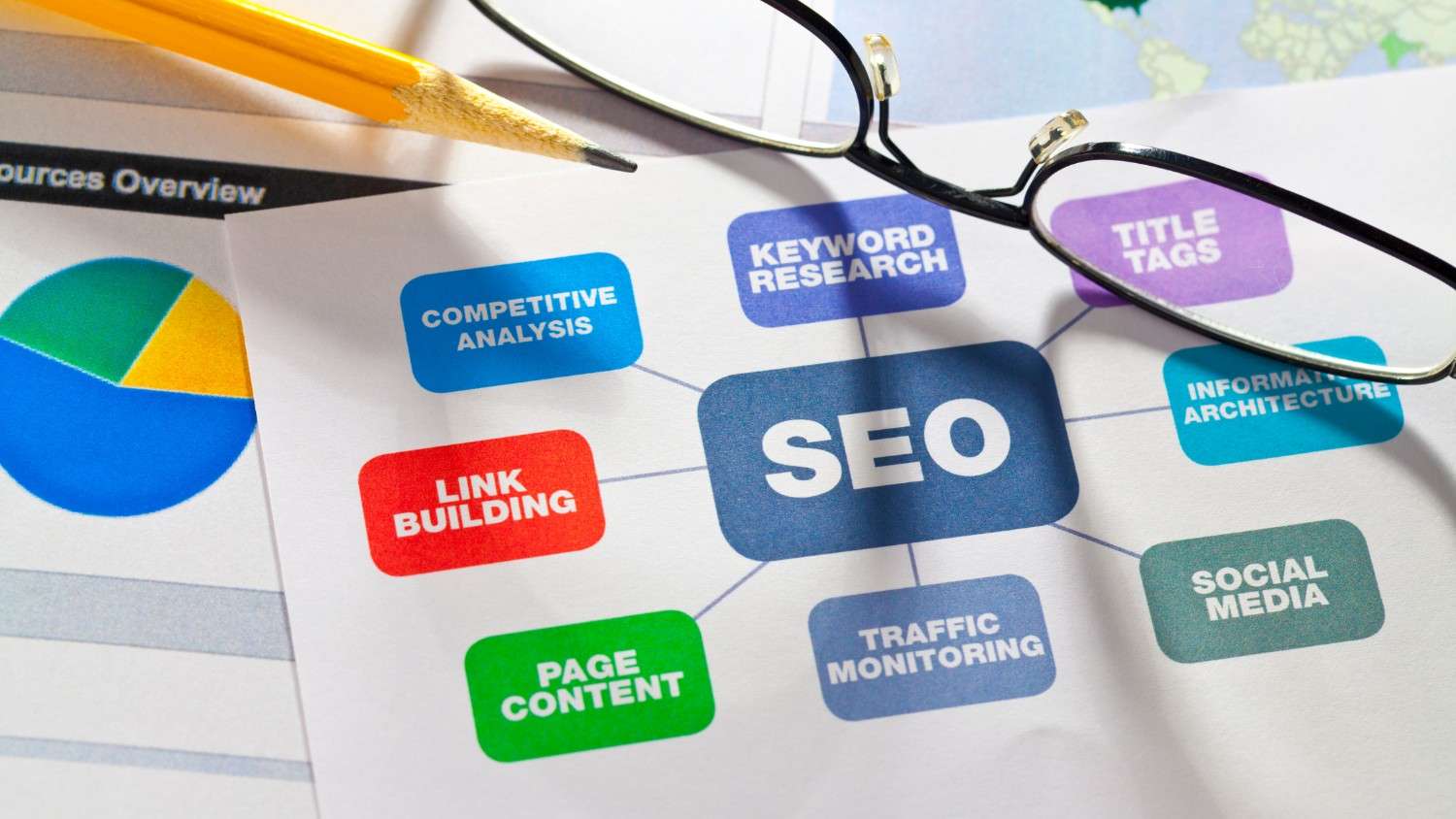
Website design and SEO are closely connected, but visual appearance alone does not determine rankings. Understanding how website design affects SEO can help businesses make better decisions when planning their online presence.
Search-friendly websites generally make it easier for both users and search engines to understand the content.
Important factors include:
Mobile usability
Most customers use smartphones for local searches, so pages should work properly across different screen sizes.
Website speed
Slow pages can create a poor user experience. Images, scripts, hosting, caching, and technical implementation should be reviewed regularly.
Site structure
Logical navigation and internal linking help users and search engines discover important pages.
Content structure
Clear headings, concise paragraphs, descriptive URLs, and useful page content make information easier to understand.
Core Web Vitals
Technical performance metrics can provide useful signals about loading performance, responsiveness, and visual stability.
A website should therefore be designed with users and search engines in mind from the beginning, rather than treating SEO as something to add after development.
Why Is Mobile-Friendly Design Important for Local Businesses?
Consider a customer standing outside a shop or travelling through Wakad who searches for a nearby service provider.
They are likely using a smartphone.
If the website has tiny text, difficult menus, slow pages, or buttons that are hard to tap, the visitor may simply return to the search results.
A mobile-friendly website should provide:
- Readable content
- Easy navigation
- Large tap-friendly buttons
- Click-to-call functionality
- Quick access to directions
- Simple enquiry forms
- WhatsApp contact options where appropriate
This becomes even more important for voice and conversational searches such as “Which service provider near me can help with this?”
Content should provide direct answers rather than forcing visitors to interpret complicated marketing language.
Can a Professional Website Generate More Leads?
Yes, when the website is designed around conversion rather than simply appearance.
A lead-generation website gives visitors clear next steps.
For example:
Google Search → Service Page → Trust Signals → Call / WhatsApp / Form → Enquiry
Useful conversion elements include:
- “Get a Quote” buttons
- Consultation forms
- Click-to-call buttons
- WhatsApp options
- Product enquiry forms
- Appointment booking
- Downloadable resources
- Customer testimonials
- Case studies
A B2B manufacturer may need an RFQ form, while a local restaurant may need directions and reservation information.
The best conversion strategy depends on how customers actually make purchasing decisions.
How Can a Website Support Different Types of Businesses in PCMC?
Manufacturing and Industrial Businesses
Industrial companies can use websites to present product specifications, capabilities, certifications, machinery, industries served, and enquiry forms.
IT and Professional Services
IT companies, consultants, and agencies can demonstrate expertise through service pages, case studies, portfolios, FAQs, and educational content.
Healthcare Businesses
Clinics and healthcare providers can make services, practitioner information, appointment options, operating hours, and location details easy to find.
Retail and Local Businesses
Retailers can showcase products, offers, business hours, directions, reviews, and contact options.
This shows why a website should be built around customer intent and industry requirements, rather than using the same template for every business.
How Should a Business Choose a Web Development Partner in PCMC?
Choosing the right development partner requires looking beyond the visual design of a portfolio.
Businesses should ask:
- Does the developer understand SEO?
- Is the website mobile-first?
- How will website speed be handled?
- Can the site be expanded later?
- Will analytics and conversion tracking be configured?
- Is the website secure?
- Can the team provide ongoing maintenance?
- Does the company understand local business requirements?
Businesses searching for a website development company in PCMC should ideally evaluate technical expertise, relevant experience, communication, scalability, and post-launch support—not just the initial development price.
What Website Mistakes Should PCMC Businesses Avoid?
Some common problems can reduce both visibility and conversions:
- Using an outdated design
- Ignoring mobile users
- Slow-loading pages
- Weak service descriptions
- Missing contact information
- No clear calls to action
- Duplicate location pages
- Keyword stuffing
- Poor-quality images
- Broken links
- No analytics or conversion tracking
- Publishing content without understanding customer intent
A website audit can help identify which problems are affecting usability, search visibility, and lead generation.
Make Your Website Work Like a Business Asset
A professional website should not exist simply because competitors have one. It should have a clear purpose: help customers discover the business, understand its value, trust the company, and take the next step.
For businesses across PCMC, that means combining professional design with mobile usability, technical performance, local search optimization, useful content, and conversion-focused functionality.
If your existing website is difficult to navigate, slow on mobile, poorly optimized for local searches, or failing to generate enquiries, it may be time for a practical website review. Identify the pages customers need, fix the technical barriers, improve the user journey, and build a website that supports measurable business growth—not just a better-looking homepage.
Frequently Asked Questions
Why is a professional website important for a local business?
A professional website helps establish credibility, explain products or services, improve online visibility, answer customer questions, and provide direct ways to make enquiries.
Does website design affect Google rankings?
Website design can indirectly influence SEO through mobile usability, page speed, site structure, accessibility, content organization, and user experience. Rankings depend on many factors, not design alone.
How does a website help with local SEO?
A website provides search engines with information about a business, its services, locations, and relevance to local searches. Useful location pages, structured information, relevant content, and consistent business details can support local visibility.
What pages should a local business website have?
Most businesses need a homepage, about page, service or product pages, contact page, relevant location pages, testimonials or case studies, FAQs, and potentially a blog or resource section.
Can a small business benefit from professional web development?
Yes. A well-built website can provide a small business with a professional online presence while creating a foundation for SEO, local search, advertising, social media traffic, and lead generation.