

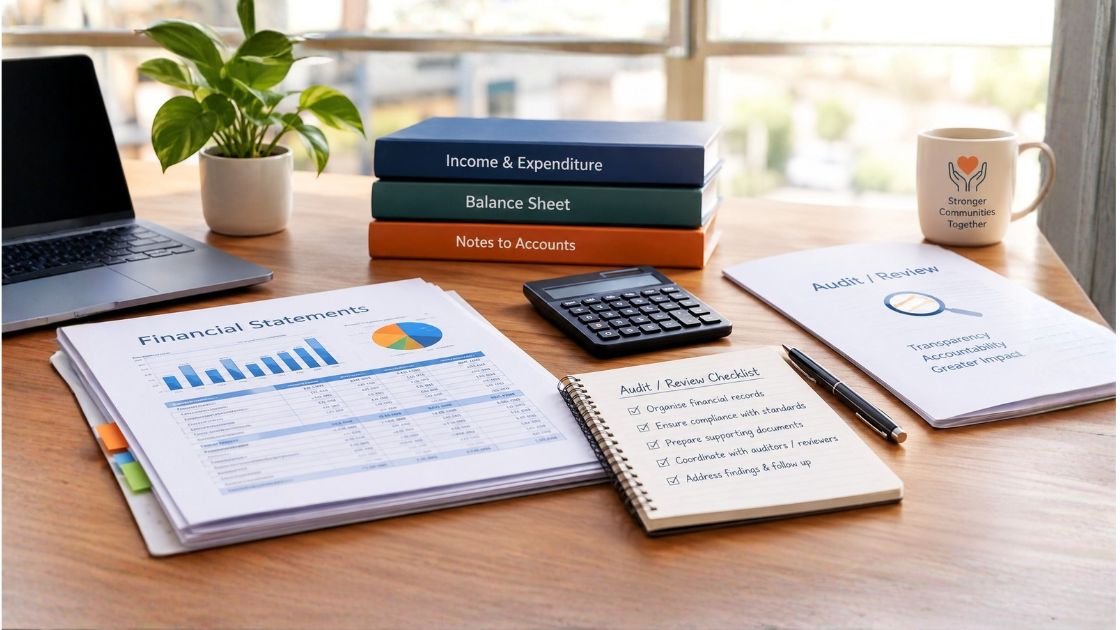




Summary – Australian not-for-profit organisations should prepare financial reports by confirming their reporting obligations, reconciling accounts, checking donations and grants, and preparing financial statements under the applicable accounting framework. Whether an independent audit or review is required depends on the organisation’s size, legal structure, regulator and funding agreements. Good financial records, clear internal controls and early planning help NFPs meet compliance obligations while building trust with donors, members and grant providers.
For a not-for-profit organisation, financial reporting is about more than balancing the books. It helps the board understand whether funds are being used responsibly, whether the organisation can meet its commitments and whether its programs remain financially sustainable.
A community organisation in Melbourne, for example, might receive government grants, individual donations and fundraising income throughout the year. If these transactions are not recorded accurately, preparing annual financial statements can become difficult, particularly when a grant provider asks how its funding was spent.
So, how should an Australian not-for-profit prepare its financial reports and arrange an audit or review? A structured approach makes the process easier to manage.
Why Is Financial Reporting Important for Not-for-Profits?
Financial reports explain an organisation’s financial position, income, expenses and cash movements. They help board members, donors, regulators and funding partners understand how the organisation manages its resources.
Accurate reports can help an NFP:
- Demonstrate accountability to donors, members and grant providers.
- Monitor operating costs and available cash.
- Identify financial risks before they become serious.
- Support funding applications and budget decisions.
- Meet applicable regulatory and governance obligations.
For instance, a charity may report a surplus but still struggle to pay staff because a grant payment has been delayed. Reviewing both its financial performance and cash flow helps the board identify the problem early and plan accordingly.
What Financial Reporting Requirements Apply to Australian Not-for-Profits?
The first step is to establish which rules apply to the organisation. An ACNC-registered charity may have different obligations from an incorporated association or another not-for-profit entity.
Under the general Australian Charities and Not-for-profits Commission (ACNC) framework, registered charities are classified by annual revenue:
- Small charities: Revenue below $500,000.
- Medium charities: Revenue from $500,000 to under $3 million.
- Large charities: Revenue of $3 million or more.
Generally, small charities do not have an ACNC requirement to submit an annual financial report or obtain an audit or review. Medium charities must submit a financial report that has been reviewed or audited, while large charities must submit an audited financial report. Exceptions and transitional arrangements can apply, including for Basic Religious Charities. Other laws, governing documents and grant agreements may also impose additional requirements.
This is why NFPs should not assume that their revenue alone determines every reporting obligation. Organisations in Melbourne and across Australia should check their legal structure, applicable state or territory requirements and funding conditions before deciding what is needed.
What Should a Not-for-Profit Financial Report Include?
For medium and large ACNC-registered charities, the annual financial report generally includes several core components, subject to applicable exceptions.
Statement of profit or loss and other comprehensive income: Shows revenue, such as donations, grants and fundraising income, alongside expenses.
Statement of financial position: Reports assets, liabilities and accumulated funds at the end of the reporting period.
Statement of cash flows: Explains how cash has moved through operating, investing and financing activities.
Statement of changes in equity: Shows changes in accumulated funds or other relevant equity balances.
Notes to the financial statements: Explain significant accounting policies, balances and disclosures.
The report also generally includes a signed and dated declaration from the organisation’s responsible people and the relevant independent reviewers or auditor’s report. The applicable accounting framework must be determined before the statements are prepared.
How Should an NFP Prepare Its Financial Reports?
Preparing financial statements becomes more manageable when the work is completed throughout the year rather than left until the reporting deadline.
1. Reconcile bank accounts and accounting records
Match bank statements against accounting records and investigate unexplained differences, duplicate transactions and outstanding payments. Regular reconciliations make it easier to identify errors before year-end.
2. Check donations, grants and fundraising income
Record income accurately and review any conditions attached to grants or restricted donations. If funding is intended for a particular community program, the organisation should be able to track the related income and expenditure.
For example, a charity receiving a grant to deliver youth support services should maintain records showing how the funding was allocated and spent, in line with the grant agreement.
3. Review expenses, payroll and liabilities
Check supplier invoices, employee wages, superannuation, tax obligations and outstanding bills. Confirm that expenses belong to the correct reporting period and that liabilities have not been overlooked.
4. Verify assets and supporting documents
Review equipment, vehicles, property, loans and other significant balances. Keep invoices, contracts, asset registers and relevant approvals available to support the figures in the financial statements.
5. Prepare the statements and arrange board oversight
Once the records are reconciled, prepare the financial statements under the applicable accounting framework. The board or responsible people should review the results, ask questions about unusual movements and ensure that the organisation is ready for any required independent review or audit.
Professional Accounting and Financial Reporting Services can help NFPs organise financial records, prepare reliable statements and identify reporting issues before they delay the year-end process.
What Is the Difference Between an Audit and a Review?
An audit provides a higher level of assurance and involves more extensive procedures to obtain evidence and support an auditor’s opinion on the financial report.
A review provides limited assurance. The reviewer performs less extensive procedures and considers whether anything has come to their attention indicating that the financial report may not comply with the applicable requirements.
For medium ACNC-registered charities, a review or audit may satisfy the standard ACNC assurance requirement. Large charities generally need an audit. However, a grant agreement, governing document or another regulator may require an audit even when the standard ACNC framework would otherwise allow a review.
The right option is therefore the one that meets the organisation’s actual obligations, not simply the option with the lowest fee.
How Can a Not-for-Profit Arrange an Audit or Review?
Start by confirming whether an audit or review is required and which professional is eligible to perform it. Check the person’s qualifications, relevant NFP experience and independence.
Next, agree on the scope, fees, records required and expected timetable. Providing organised documents early can reduce avoidable delays.
A practical preparation checklist includes:
- Bank statements and completed reconciliations.
- General ledger and trial balance.
- Donation records and grant agreements.
- Supplier invoices and payroll records.
- Asset registers and loan documentation.
- Board minutes and financial approvals.
- Previous financial statements and audit or review reports.
During the engagement, respond promptly to questions and provide clear supporting evidence. Once the report is finalised, check that it is signed and dated where required, that the responsible people’s declaration is complete, and that the correct documents are lodged with the relevant regulator.
What Financial Reporting Mistakes Should NFPs Avoid?
Common problems include mixing restricted grant funds with general operating funds, failing to reconcile accounts, overlooking liabilities and preparing statements using an unsuitable accounting framework.
Another frequent mistake is waiting until year-end to organise records. Missing invoices, unclear grant expenditure and incomplete payroll documentation can all slow down an audit or review.
A better approach is to reconcile accounts monthly, monitor budgets, retain supporting documents and review grant conditions throughout the year. These habits help the board spot problems earlier and reduce the pressure of annual reporting.
Prepare Your NFP’s Financial Reports with Confidence
Reliable financial reporting helps not-for-profit organisations demonstrate accountability, protect their resources and make better decisions about the communities they serve. Whether your organisation operates in Melbourne, regional Victoria or elsewhere in Australia, the best starting point is to confirm your obligations and address record-keeping gaps before year-end.
If your organisation needs help improving its financial reporting process, preparing annual statements or getting ready for an independent audit or review, seek professional accounting support early. Discuss your reporting requirements, documentation and deadlines with a qualified adviser so your team can focus on delivering its mission with greater confidence.
Frequently Asked Questions
Does every not-for-profit in Australia need an audit?
No. Audit requirements depend on the organisation’s legal structure, regulator, size and other obligations. Under the standard ACNC framework, large charities generally require an audit, while medium charities may have a review or audit. Other requirements can apply.
Can a small charity prepare financial reports voluntarily?
Yes. Small ACNC-registered charities can generally choose to submit a financial report even when it is not required by the ACNC. Their governing documents, funding arrangements or other applicable rules may still require reporting.
What documents are needed for an NFP audit?
Common documents include financial statements, bank reconciliations, grant agreements, donation records, invoices, payroll information, asset registers and board minutes. The auditor may request additional evidence based on the organisation’s activities.
How can an NFP make financial reporting easier?
Maintain accurate records throughout the year, reconcile accounts regularly, track restricted funding separately and confirm reporting requirements well before the deadline. Seek qualified advice when accounting or compliance obligations are unclear.