



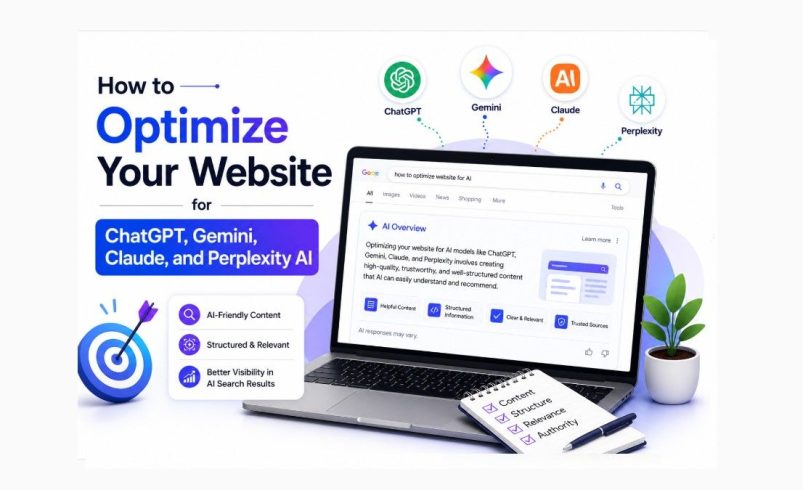
Summary – More people are using AI platforms like ChatGPT, Gemini, Claude, and Perplexity AI to find answers instead of browsing multiple search results. If you want your website to stay visible, focus on creating helpful, experience-driven content, improving technical SEO, organising pages clearly, and building topical authority. Websites that answer users’ questions naturally and demonstrate expertise are more likely to be referenced by Google AI Overviews and AI-powered answer engines.
For years, businesses measured SEO success by their position on Google’s first page. While Google remains the largest search engine, user behaviour is changing. Many people now ask AI assistants for recommendations, explanations, comparisons, and solutions before they even click on a website.
For example, instead of searching through multiple blogs, a user may simply ask, “How do I optimise my website for AI search?” Within seconds, ChatGPT or Gemini can provide a detailed answer by gathering information from reliable sources.
This change doesn’t mean traditional SEO is becoming less important. Instead, it means businesses need to create content that works for both search engines and AI-powered answer platforms.
To stay competitive, your website should:
- Answer users’ questions clearly.
- Demonstrate genuine expertise.
- Provide trustworthy information.
- Be easy for both people and AI to understand.
- Offer practical solutions instead of promotional content.
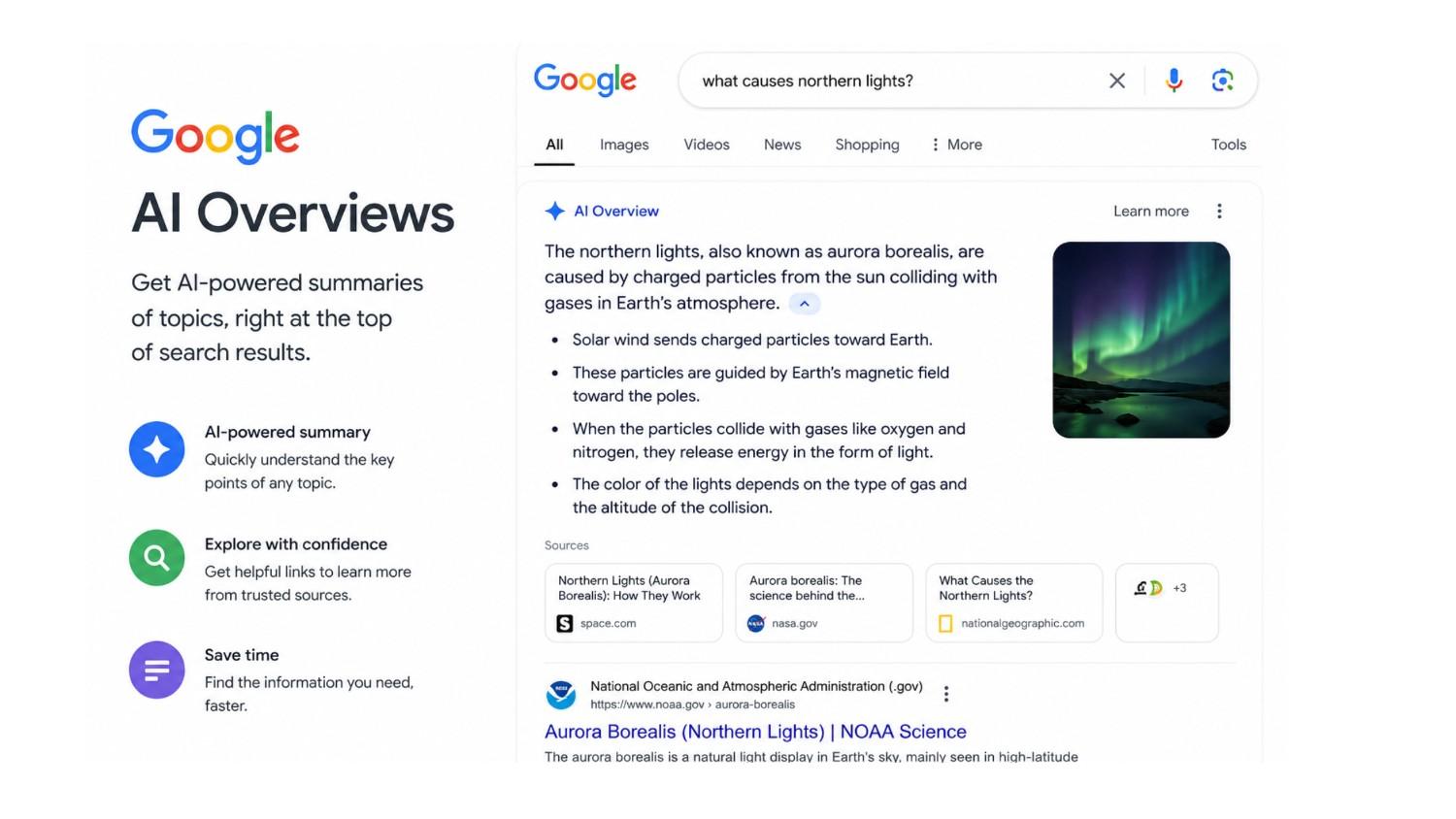
The businesses that adapt early will have a stronger opportunity to appear in Google AI Overviews and AI-generated responses.
Why Does AI Search Optimisation Matters?
AI search engines don’t simply match keywords. They analyse context, user intent, authority, and content quality before generating an answer.
This is why some websites with good Google rankings still don’t appear in ChatGPT or Perplexity AI responses. The content may rank well traditionally, but it doesn’t provide enough depth or structure for AI systems to reference confidently.
AI-friendly content usually includes:
- Clear answers to common questions.
- Logical heading structures.
- Practical examples.
- Easy-to-read formatting.
- Updated and trustworthy information.
- Real experience rather than generic advice.
Think about it this way. If two websites explain the same topic, AI is more likely to recommend the one that provides complete answers, useful examples, and genuine expertise.
That’s why creating helpful content should always be your first priority.
What Makes Content AI-Friendly?
Many people believe AI SEO is completely different from traditional SEO. In reality, the fundamentals remain the same—create valuable content that helps users solve problems.
However, AI assistants prefer information that is easier to understand and extract.
Your content should:
- Start by answering the main question.
- Use descriptive headings.
- Keep paragraphs short and focused.
- Explain technical terms in simple language.
- Include relevant examples.
- Cover the topic comprehensively.
For instance, if you’re discussing schema markup, don’t just mention it. Explain what it is, why it matters, and how businesses can use it. A simple explanation helps readers while also making it easier for AI systems to understand your content.
Another important factor is readability. Large blocks of text often discourage readers. Breaking information into smaller sections, lists, and bullet points improves the overall experience.
Focus on Topics Instead of Repeating Keywords
Modern AI models understand relationships between topics much better than earlier search algorithms. Instead of counting how many times a keyword appears, they evaluate whether your website demonstrates authority on a subject.
For example, if you publish one article about SEO, AI may understand that you cover the topic. But if your website also includes articles about technical SEO, local SEO, content marketing, Core Web Vitals, structured data, AI search, and website performance, it sends a much stronger signal that you’re an expert in digital marketing.
A strong topical strategy includes:
- Publishing comprehensive pillar articles.
- Creating supporting blogs around related topics.
- Linking articles naturally.
- Updating existing content regularly.
- Covering common customer questions.
This approach improves both user experience and AI understanding while strengthening your overall website authority.
Build Trust Before You Try to Rank
One of the biggest changes in AI search is the importance of trust. AI assistants aim to provide accurate information, so they naturally favour websites that demonstrate credibility.
Google describes this through E-E-A-T:
- Experience – Show first-hand knowledge and practical examples.
- Expertise – Demonstrate professional understanding of the topic.
- Authoritativeness – Publish consistently valuable content.
- Trustworthiness – Maintain accurate, transparent, and reliable information.
Imagine reading two articles about SEO. One simply lists generic tips copied from other websites. The other explains strategies based on real projects, discusses challenges, and shares practical recommendations. Most readers will trust the second article—and AI systems are more likely to value it as well.
Simple ways to strengthen trust include:
- Writing from real experience.
- Keeping content updated.
- Adding author information.
- Including relevant examples.
- Avoiding exaggerated claims.
- Citing reliable information when appropriate.
Building trust takes time, but it’s one of the strongest long-term advantages any website can develop.
Practical Ways to Optimise Your Website for AI Search
The good news is that you don’t need to redesign your website from scratch to improve your visibility in AI-powered search. In most cases, consistent improvements to your content, technical SEO, and website structure can make a noticeable difference over time.
Start by making every page easy to understand for both users and AI systems. Your content should answer questions naturally, provide useful context, and guide readers toward the next step.
Here are some practical ways to strengthen your website for AI search:
- Use clear and descriptive headings that explain what each section covers.
- Keep paragraphs short so readers can quickly find the information they need.
- Answer the main question near the beginning of the page.
- Add bullet points and numbered lists where they improve readability.
- Include real examples that demonstrate your experience.
- Link to related articles so readers can continue learning.
- Update important pages regularly with fresh insights and accurate information.
Small improvements like these help search engines understand your content while creating a better experience for your visitors.
Don’t Ignore Technical SEO
Great content alone isn’t always enough. If search engines struggle to crawl or understand your website, your visibility can suffer.
Review your website regularly and ensure that it:
- Loads quickly on desktop and mobile devices.
- Uses HTTPS to provide a secure browsing experience.
- Has a clean and logical navigation structure.
- Includes an XML sitemap.
- Uses descriptive page titles and meta descriptions.
- Implements structured data where appropriate.
- Avoids broken links and duplicate pages.
Technical SEO provides the foundation that allows high-quality content to perform at its best. Even small improvements in website speed and usability can positively influence both search rankings and user engagement.
Build Topical Authority Instead of Publishing Random Content
Publishing articles on unrelated topics makes it difficult for search engines and AI assistants to understand your expertise.
Instead, focus on building topical authority by creating content around one core subject and supporting it with related articles. For example, if you run a Web Development Services Company in Pune, don’t limit your website to service pages. Publish helpful content around AI SEO, technical SEO, website performance, user experience, and related digital marketing topics to build authority.
For example, if your business specialises in digital marketing, your content strategy could include:
- AI SEO and LLM SEO
- Technical SEO
- Local SEO
- Content marketing
- Website optimisation
- Core Web Vitals
- Google AI Overviews
- Schema markup
- Content strategy
Connecting these articles through natural internal links helps users discover more information while reinforcing your authority on the subject.
Over time, this approach increases your chances of being recognised as a trusted source across Google Search and AI-powered platforms.
Common Mistakes That Limit AI Visibility
Many websites still rely on outdated SEO practices that don’t align with how AI systems evaluate content.
Avoid these common mistakes:
- Writing only for keywords instead of answering user questions.
- Publishing thin or repetitive articles with little value.
- Using AI-generated content without human editing.
- Ignoring internal linking between related pages.
- Forgetting to update older content.
- Publishing without demonstrating real experience.
- Creating long introductions before answering the user’s question.
- Neglecting technical SEO and page performance.
Rather than trying to produce more content, focus on creating fewer but more valuable articles that genuinely help your audience.
Think Like Your Audience
One of the simplest ways to improve your content is to think about how people actually ask questions.
Instead of focusing only on short keywords, consider conversational searches such as:
- How can I optimise my website for ChatGPT?
- Why isn’t my website appearing in AI search?
- Does schema markup help AI understand my website?
- How do AI search engines choose websites?
- What makes content trustworthy for AI?
Answering these questions naturally makes your content more useful for readers and easier for AI assistants to understand.
This approach also supports voice search, featured snippets, Google AI Overviews, and answer engines that rely on conversational queries.
The Future of SEO Is Human-First
Search technology will continue to evolve, but one principle is unlikely to change: websites that genuinely help people will always have an advantage.
Whether someone finds your business through Google Search, ChatGPT, Gemini, Claude, or Perplexity AI, they expect the same things:
- Accurate information.
- Clear explanations.
- Practical recommendations.
- Trustworthy advice.
- A positive user experience.
Instead of chasing every algorithm update, invest in creating content that solves real problems and reflects genuine expertise. That strategy benefits both traditional SEO and AI-driven search.
Ready to Future-Proof Your Website?
AI-powered search is becoming an important part of how people discover businesses, compare services, and make purchasing decisions. The websites that stand out will be those that combine helpful content, technical excellence, genuine expertise, and a user-first approach.
If you want your website to perform well across Google Search, Google AI Overviews, ChatGPT, Gemini, Claude, and Perplexity AI, start by creating content that answers real questions, demonstrates experience, and builds trust over time. A well-planned strategy that combines SEO, AEO, GEO, and LLM SEO will not only improve your visibility but also help you attract qualified visitors, build stronger credibility, and generate more meaningful business enquiries as the future of search continues to evolve.
Frequently Asked Questions
Can ChatGPT recommend my website?
Yes. If your content is helpful, authoritative, well-structured, and available through sources that ChatGPT can access when using web search, it has a better chance of being referenced in AI-generated responses.
Is traditional SEO still important?
Absolutely. Technical SEO, quality content, internal linking, backlinks, and user experience remain essential. AI search builds on these principles rather than replacing them.
Does schema markup improve AI SEO?
Schema markup helps search engines understand your content more clearly by identifying articles, organisations, FAQs, authors, and other important elements. While it isn't a direct ranking factor, it supports better content interpretation.
How often should I update my content?
Review your key pages every three to six months. Refresh examples, statistics, screenshots, and recommendations to keep your content accurate and relevant.
Should every business optimise for AI search?
Yes. Whether you operate locally or globally, optimising for AI-powered search can help improve visibility, strengthen brand authority, and reach customers who increasingly rely on AI assistants to make decisions.