


Summary — Many Australian startup founders treat business structure as a registration task rather than a strategic business decision. Choosing between a sole trader, partnership, company or trust can affect ownership, liability, taxation, compliance, funding and future growth. Business Advisory Services can help founders assess these factors before selecting a structure that suits both their current operations and long-term plans.
Starting a business often begins with a simple question: What business structure should I choose?
For many Australian founders, the decision is based on whatever appears cheapest, fastest or easiest to establish. That may be suitable for a very small business, but the decision can become more complicated when the business starts hiring employees, bringing in investors, adding co-founders, entering new markets or signing larger contracts.
The more useful question is not simply, “Which business structure is easiest?” It is, “Which structure fits the way this business plans to operate and grow?”
This is where Business Advisory Services can provide practical value. Rather than looking only at registration requirements, advisory support can connect business structure with ownership, finance, compliance, risk management and growth planning.
Why Does Business Structure Matter More Than Startup Founders Think?
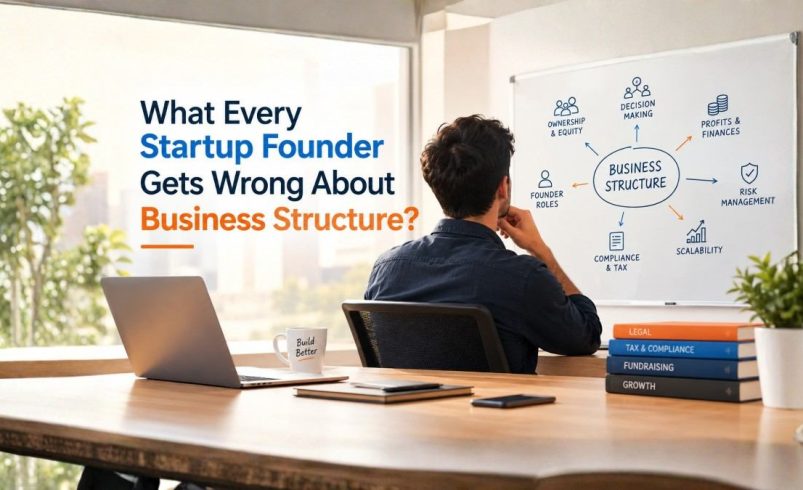
A business structure determines how a business is legally organised and can affect ownership, decision-making, liability, taxation and compliance requirements.
In Australia, the four common business structures are sole trader, partnership, company and trust. ASIC and business.gov.au explain that the structure chosen can affect registrations, legal obligations, tax, personal liability, control and ongoing administration.
Consider two founders building a software startup in Melbourne:
At the beginning, they may divide responsibilities informally, with one founder handling technology and the other managing sales and business development. But once they begin hiring employees or approaching investors, important questions arise:
- Who owns the intellectual property?
- What percentage of the business does each founder own?
- What happens if one founder leaves?
- How will new investment affect ownership?
- Who can make major business decisions?
- Does the current structure suit the next stage of growth?
A structure selected without considering these questions can create unnecessary administrative, financial and legal work later.
What Do Australian Startup Founders Commonly Get Wrong About Business Structure?
“I Can Choose Anything Now and Change It Later”
A business can sometimes change its structure as it grows, but that does not mean restructuring is always straightforward.
Changing a structure can involve contracts, tax implications, accounting records, registrations, ownership arrangements, banking, intellectual property and compliance requirements. Business.gov.au notes that businesses commonly change structures as their circumstances develop, such as moving from a sole trader structure to a company.
A founder expecting outside investment may therefore need to think about future ownership and funding before choosing the initial structure.
“The Cheapest Structure Is Automatically the Best”
Cost matters, particularly during the early stages of a startup.
However, registration cost is only one part of the decision. Founders should also consider ongoing compliance, liability exposure, taxation, administration, funding plans, ownership arrangements and future expansion.
A sole trader structure is relatively simple and inexpensive to establish, but the owner is personally responsible for the business’s debts and obligations. A company is a separate legal entity but generally involves greater administration and ongoing legal obligations.
Saving money at the beginning may therefore not be beneficial if the structure creates significant restructuring work later.
“Business Structure Only Matters for Compliance”
This is another common misconception.
Business structure can influence decisions far beyond registration and compliance. It can affect how ownership is arranged, how investors participate, how profits are handled, how business risks are managed and how the organisation prepares for expansion.
That makes business structure an important business planning decision, not simply an administrative formality.
“My Co-Founder and I Trust Each Other, So We Don’t Need Agreements”
Trust is important, but written agreements can create clarity between founders.
A practical founders’ agreement can address roles, responsibilities, ownership, decision-making, intellectual property, confidentiality, founder exits and dispute resolution.
For example, two founders may initially agree verbally that they will each own 50% of a business. If one founder contributes substantially more capital or works full-time while the other remains part-time, disagreements can arise if these expectations were never formally documented.
Clear documentation can help reduce uncertainty before problems occur.
How Should You Compare Different Australian Business Structures?
There is no single structure that suits every Australian startup:
|
Structure |
Often considered for |
Important consideration |
|
Sole trader |
Solo founders and small businesses |
Simple to establish, but the owner is personally responsible for business debts and obligations |
|
Partnership |
Businesses operated by two or more partners |
Ownership, responsibilities, income or losses and partnership arrangements should be clearly documented |
|
Company |
Startups planning significant growth or external investment |
Separate legal entity with more formal governance and compliance requirements |
|
Trust |
Certain businesses and investment or asset-holding arrangements |
More complex structure requiring appropriate administration and professional advice |
ASIC identifies sole trader, partnership, company and trust as the main Australian business structures. A company is a separate legal entity from its owners, while a sole trader is personally responsible for the business.
The important point is to compare structures against the actual business plan rather than choosing one simply because it is common.
When Does a Company Make Sense for an Australian Startup?
A company may be considered when a startup expects multiple shareholders, external equity investment, employee ownership arrangements or significant growth.
For example, a technology startup in Sydney planning to raise capital from angel investors may need a structure that accommodates share ownership and formal corporate governance.
Most small Australian companies are proprietary companies limited by shares, commonly using “Pty Ltd” in the company name. Companies must be registered with ASIC and have ongoing legal and administrative obligations.
However, founders should also understand the trade-off. A company generally involves more formal records, governance requirements, reporting and compliance responsibilities than a sole trader structure.
The decision should therefore consider both the potential benefits and the additional administrative obligations.
When Can a Partnership Be a Practical Choice?
A partnership can be relevant when two or more people operate a business together and share income or losses.
For example, two professionals starting a consulting practice in Brisbane may choose to operate as a partnership if the structure suits their ownership arrangements and business plans.
However, partners should clearly establish responsibilities, financial contributions, decision-making authority and what happens if one partner leaves.
Partnership laws and requirements can differ between Australian states and territories, so founders should obtain appropriate professional advice when establishing or changing a partnership.
A partnership may not be suitable for every growing business, particularly where the founders expect complex ownership arrangements or significant external investment.
How Does Business Structure Affect Startup Funding?
Funding is one area where an early structure can become important later.
Investors and lenders may examine matters such as:
- Ownership records
- Shareholding arrangements
- Founder agreements
- Financial statements
- Intellectual property ownership
- Corporate documents
- Tax and statutory records
- Existing contracts
- Outstanding liabilities
Imagine an Australian technology startup that has spent two years developing a software platform but has never clearly documented who owns the intellectual property.
When an investor begins due diligence, resolving the ownership issue can become a major distraction at the exact point when the founders need to focus on securing investment.
Good business planning aims to reduce these avoidable problems rather than trying to fix them after they appear.
Why Do Business Advisory Services Matter for Startup Structure?
Business Advisory Services can help Australian founders connect business structure decisions with their broader business plan.
A structured advisory discussion may examine:
- Number of founders and ownership expectations
- Funding requirements
- Personal and business liability
- Expected revenue and operating model
- Tax and compliance considerations
- Hiring and employee incentive plans
- Intellectual property ownership
- Expansion plans
- Future investment or acquisition possibilities
- Administrative capacity
This does not mean every startup should use the same structure.
Good advisory work begins with the business circumstances and compares available structures against the founder’s objectives, financial position, risk profile and growth plans.
Does Business Structure Affect Startup Tax?
Yes. Tax and compliance obligations can vary depending on the business structure and the circumstances of the startup.
However, founders should be careful about choosing a structure simply because it is described as “tax efficient.” The decision should consider the broader financial picture, including taxation, accounting and compliance costs, cash flow, profit distribution, remuneration, investment plans and future business growth.
For Australian startups, tax and registration requirements may also vary depending on the chosen structure and the nature of the business. Before making a structural decision, founders should consider obtaining professional accounting and tax advice. Business.gov.au notes that business structure can influence tax obligations, personal liability, control and ongoing administrative requirements.
Maintaining healthy cash flow management practices is also important, as strong revenue does not necessarily mean a startup has sufficient cash available to meet its financial commitments.
What Happens If Founders Ignore Structure Until They Need Funding?
A common pattern can look like this:
Idea → informal operation → revenue → rapid growth → funding discussion → documentation problems
At the beginning, informal arrangements may feel manageable.
But when an Australian startup reaches the funding stage, investors may request clear ownership information, financial records, contracts, intellectual property documentation and corporate records.
The founders may then have to spend valuable time reconstructing decisions that should ideally have been documented from the beginning.
Business planning is not about predicting every future event. It is about reducing avoidable uncertainty.
How Should an Australian Founder Choose a Business Structure?
Before registering a startup, founders should ask:
- Am I operating alone or with co-founders?
- Will I need external equity funding?
- How much personal liability could the business create?
- Will I hire employees or offer employee equity?
- How complex will the business operations become?
- Will the business operate across multiple Australian states or territories?
- Could the business eventually be acquired?
- Will institutional investors become part of the ownership structure?
- What level of administration can the founders manage?
Australian government guidance recommends considering factors such as tax, asset protection, setup costs, personal liability, control and ongoing paperwork when choosing a business structure.
The answers can help founders understand which structures deserve closer consideration.
What Should Founders Decide Before Registering a Startup?
Registration should come after the founders have considered the basic strategic questions.
Founders should clarify:
- Ownership percentages
- Roles and responsibilities
- Capital contributions
- Intellectual property ownership
- Decision-making authority
- Funding expectations
- Founder exit arrangements
- Expected compliance workload
- Tax and financial implications
- Future growth plans
For a technology startup, investor readiness and intellectual property ownership may receive significant attention.
For a professional consultancy, partner responsibilities, liability and profit-sharing arrangements may be more important.
For a manufacturing startup, contracts, capital investment, operational risks and regulatory requirements may receive greater attention.
That is why a structure that works well for one Australian startup may not be appropriate for another.
The Biggest Business Structure Mistake Is Thinking Only About Today
A startup structure should not be selected only because it is quick or inexpensive to establish.
The better starting point is the business itself: how it will operate, who will own it, what risks it may face, how it expects to raise capital and where it wants to go next.
If you are preparing to launch, restructure, add a co-founder, seek investment or expand operations, consider speaking with a qualified Business Advisory Services in Melbourne along with appropriate accounting, tax and legal professionals.
A focused business advisory process can help turn a complicated structural decision into a clear and documented action plan.
Frequently Asked Questions About Business Structure for Australian Startups
What is the best business structure for an Australian startup?
There is no universally suitable structure for every startup. The appropriate choice depends on factors such as the founders, liability, funding plans, ownership, taxation, compliance requirements and long-term growth plans.
Should a startup choose a partnership or company?
A partnership may suit two or more people operating a business together, while a company may be considered where separate legal entity status, share ownership, external investment or significant growth are important considerations. The decision should be based on the startup's circumstances and objectives.
Can I change my business structure after starting?
Yes, a business may be able to change its structure as circumstances develop. However, restructuring can have legal, tax, financial and administrative implications. Business.gov.au specifically identifies changes such as sole trader to company and partnership to company as common restructuring situations.
Does business structure affect startup funding?
Yes. Structure can influence ownership arrangements, shareholding, investment mechanisms, governance, documentation and investor due diligence. Founders planning to raise external capital should consider these factors early.
What should Australian founders decide before registering a startup?
Founders should clarify ownership, roles, funding plans, liability, intellectual property, decision-making, taxation, compliance and future growth plans before selecting a structure. Professional Business Advisory Services can help organise these questions into a practical decision framework.