



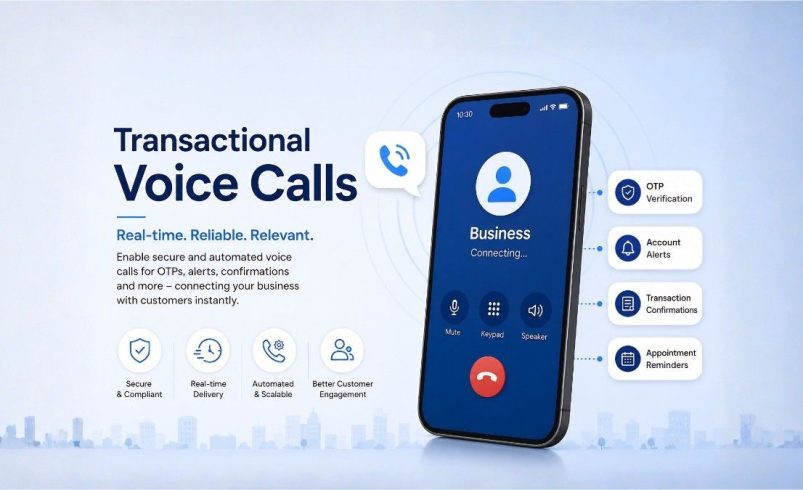
Summary – Banks use transactional voice calls to send real-time customer notifications for important activities such as fraud alerts, transaction confirmations, payment reminders, account updates, and security verification. Unlike promotional calls, these automated voice communications are triggered by customer actions or banking events, helping financial institutions deliver urgent information faster and improve customer trust.
With the rise of digital banking across regions like India, Southeast Asia, and global financial markets, banks are increasingly using AI-powered voice communication, automated calling systems, and cloud communication platforms to provide secure and personalized customer alerts.
What Are Transactional Voice Calls in Banking?
Transactional voice calls are automated or AI-assisted phone calls sent by banks to communicate important account-related information. These calls are initiated after a specific customer activity or banking event occurs.
For example:
- A customer makes a high-value transaction
- A suspicious login attempt is detected
- A credit card payment is due
- A loan installment date is approaching
- A security verification is required
The purpose of these calls is not sales or marketing. Instead, transactional voice communication focuses on improving customer safety, reducing fraud risks, and keeping customers informed.
Unlike traditional customer service calls, transactional voice calls are automated, scalable, and can reach thousands of customers within minutes.
Why Are Banks Using Voice Calls for Customer Alerts?
Banking communication has moved beyond traditional SMS and emails. Customers now expect faster, clearer, and more reliable updates, especially when money and security are involved.
Voice calls provide an additional layer of communication because they demand immediate attention compared to text-based notifications.
Faster Delivery of Critical Banking Information
A fraud alert received through a voice call can immediately notify a customer about suspicious activity.
For example, if a customer’s card is used in an unusual location, a bank can trigger an automated voice call asking:
“Did you authorize this transaction?”
This allows customers to respond quickly and helps banks reduce potential financial losses.
Better Fraud Prevention and Risk Management
Fraud prevention is one of the strongest use cases of transactional voice calls.
Banks can use automated voice alerts for:
- Unauthorized transaction verification
- Suspicious payment confirmation
- Account login alerts
- Card usage monitoring
- Identity verification
In markets like India, where digital payments through platforms such as UPI and mobile banking have grown rapidly, real-time customer verification has become increasingly important.
Improved Accessibility for Different Customer Groups
Not every customer regularly checks banking apps, emails, or SMS messages.
Voice alerts help banks communicate with:
- Senior citizens
- Customers with limited internet access
- Customers who prefer regional languages
- Users in areas with inconsistent mobile data connectivity
Multilingual voice communication is especially valuable in countries like India, where customers may prefer receiving important financial updates in their local language.
Common Uses of Transactional Voice Calls in Banks
Fraud and Suspicious Transaction Alerts
Fraud notification calls help customers take immediate action.
Examples include:
- “A transaction of ₹50,000 was attempted on your account. Please confirm if this was authorized.”
- “Your account login was detected from a new device.”
These alerts improve customer confidence and strengthen fraud protection systems.
Account Transaction Notifications
Banks use voice alerts for important account activities, including:
- Large withdrawals
- Deposit confirmations
- Balance-related updates
- Transaction status notifications
These communications help customers stay aware of account activity without manually checking banking applications.
Loan and EMI Payment Reminders
Banks and financial institutions use automated voice calls to remind customers about:
- Upcoming EMI payments
- Loan repayment schedules
- Missed payment notifications
- Application status updates
These reminders improve repayment rates while reducing manual follow-up efforts.
Credit Card Notifications
Credit card users commonly receive alerts related to:
- Payment due dates
- Credit limit usage
- International transactions
- Card security verification
Voice calls provide immediate communication when action is required.
OTP and Authentication Support
Although SMS remains common for OTP delivery, voice-based verification provides an alternative when:
- SMS delivery fails
- Customers are travelling internationally
- Additional identity verification is required
How Transactional Voice Calls Improve Customer Experience in Banking?
Customer experience is now a major differentiator among financial institutions. Banks are focusing on communication that is faster, more personalized, and more convenient.
Personalized Banking Communication
Modern voice platforms can personalize conversations using customer information.
Instead of generic alerts, customers can receive messages based on:
- Account activity
- Transaction history
- Service requests
- Banking preferences
This creates a more human-like experience.
24/7 Automated Customer Engagement
Banks operate across different time zones and customer schedules.
Automated voice communication allows banks to send important alerts outside traditional working hours without requiring manual customer service intervention.
Reduced Customer Support Pressure
Many banking queries are related to simple updates and confirmations.
Automated voice alerts help reduce the workload on customer support teams by handling repetitive communication tasks.
Transactional Voice Calls vs SMS and Email Alerts
|
Communication Channel |
Best Use Case |
Customer Attention |
|
Voice Calls |
Fraud alerts, urgent verification |
High |
|
SMS |
Transaction confirmations |
Medium |
|
|
Statements and detailed information |
Lower |
|
Push Notifications |
App-based updates |
Depends on app usage |
A combination of multiple channels usually delivers the best results. Banks often use SMS, email, mobile apps, and voice calls together as part of an omnichannel communication strategy.
How AI Voice Technology Is Changing Banking Alerts?
Artificial intelligence is improving how banks communicate with customers.
AI voice solutions can:
- Understand customer responses
- Provide automated conversations
- Support multiple languages
- Route complex cases to human agents
- Analyze customer interactions
For example, an AI-powered banking assistant can call a customer about suspicious activity and ask verification questions before escalating the issue.
This reduces response time and improves operational efficiency.
Role of Outbound Voice Calls Services in Banking Communication
Banks rely on advanced communication solutions to manage large-scale customer notifications securely. Outbound Voice Calls Services help financial institutions automate customer outreach for transactional updates, verification calls, payment reminders, and security notifications.
These services enable banks to:
- Send automated voice alerts at scale
- Improve customer engagement
- Reduce manual calling requirements
- Track communication performance
- Deliver consistent customer experiences
When integrated with banking systems and customer databases, outbound voice communication becomes a powerful tool for improving service reliability.
Benefits of Transactional Voice Calls for Banks
Stronger Fraud Protection
Faster communication helps customers identify suspicious activities quickly.
Improved Operational Efficiency
Automation reduces the need for manual calling teams and repetitive tasks.
Higher Customer Satisfaction
Customers appreciate receiving timely updates about important financial activities.
Better Customer Retention
Reliable communication builds trust and strengthens long-term relationships.
Challenges Banks Should Consider
Maintaining Data Security
Banking voice communication must protect sensitive customer information through secure systems and compliance practices.
Avoiding Customer Fatigue
Banks should ensure calls are relevant and only sent when necessary.
Too many unnecessary alerts can reduce customer trust.
Regulatory Compliance
Financial institutions must follow communication regulations, consent requirements, and customer privacy guidelines.
Language and Voice Accuracy
Voice systems should support regional languages and different speaking patterns to improve understanding.
Best Practices for Banks Using Transactional Voice Calls
Banks should follow these strategies for better results:
Keep Messages Short and Clear
Customers should understand the purpose of the call within seconds.
Use Simple Language
Avoid complex banking terminology.
Provide Customer Action Options
Allow customers to confirm transactions, report fraud, or connect with support teams.
Combine Multiple Communication Channels
Voice calls work best when combined with SMS, email, and mobile banking notifications.
Measure Performance
Track:
- Call delivery rate
- Customer response rate
- Fraud prevention outcomes
- Customer feedback
The Future of Transactional Voice Communication in Banking
The future of banking alerts will involve more intelligent and personalized communication.
Emerging trends include:
- AI-powered banking conversations
- Voice biometrics for authentication
- Predictive fraud alerts
- Real-time customer assistance
- Integration with digital banking ecosystems
As customers expect faster and safer financial experiences, transactional voice calls will continue becoming an important part of modern banking communication strategies.
Why Should Banks Invest in Smarter Voice Communication?
Transactional voice calls are becoming a critical banking communication channel because they combine speed, personalization, and security. From preventing fraud to improving customer satisfaction, voice alerts help banks create stronger relationships with customers.
Financial institutions looking to modernize customer communication should evaluate secure voice automation solutions that integrate with existing banking systems and support scalable customer engagement.
Businesses and banking organizations exploring advanced voice communication strategies can connect with communication technology experts to understand how automated voice solutions can improve customer alerts, reduce operational costs, and deliver better banking experiences.
Frequently Asked Questions
What are transactional voice calls in banking?
Transactional voice calls are automated calls sent by banks to provide account-related alerts such as fraud notifications, payment reminders, and transaction updates.
Why do banks use voice calls instead of only SMS?
Voice calls provide higher customer attention and are more effective for urgent alerts where immediate action is required.
Are automated banking voice calls secure?
Yes, when implemented with proper security measures, encryption, authentication processes, and compliance standards.
How do voice alerts help prevent fraud?
They allow banks to quickly notify customers about suspicious activities and confirm whether transactions are legitimate.
Can banks send voice alerts in regional languages?
Yes. Modern voice communication platforms can support multiple languages to improve customer accessibility.
How do AI voice bots help banks?
AI voice bots automate customer conversations, verify information, answer basic queries, and improve communication efficiency.