


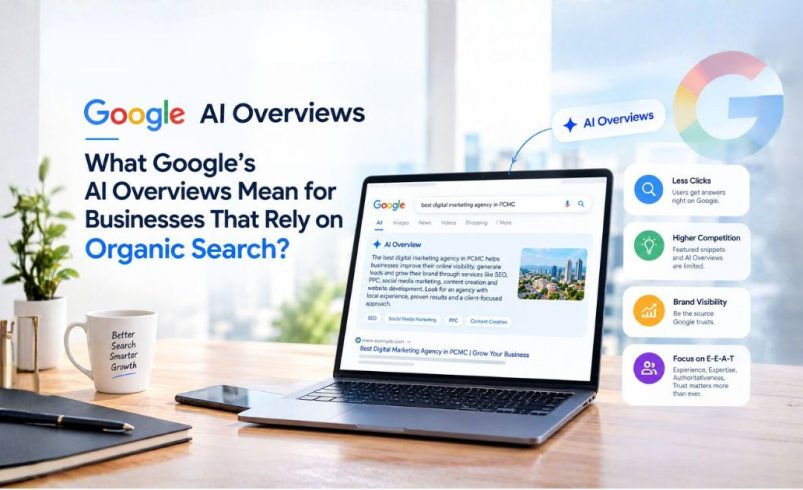
Summary – Google’s AI Overviews are changing how people discover information, but they do not make SEO irrelevant. Instead, businesses need to think beyond traditional keyword rankings and focus on useful content, topical authority, brand visibility, technical SEO, and qualified traffic. Websites that provide original, trustworthy answers can still benefit from Google’s evolving AI-powered search experience.
Imagine your business has spent years building organic visibility.
You rank for important keywords. Your blog attracts visitors. Your service pages bring leads. Then a potential customer searches for a question related to your industry and Google provides an AI-generated answer before the traditional results.
Naturally, the question is:
“If Google answers the user directly, will people still visit my website?”
It is a reasonable concern.
Google Search is becoming more conversational. AI Overviews and AI Mode can help users explore complicated questions, compare options, and discover information through links to websites.
For businesses that depend heavily on organic search, the lesson isn’t to abandon SEO. It is to understand how search visibility is changing and what users expect from websites now.
What Are Google AI Overviews?
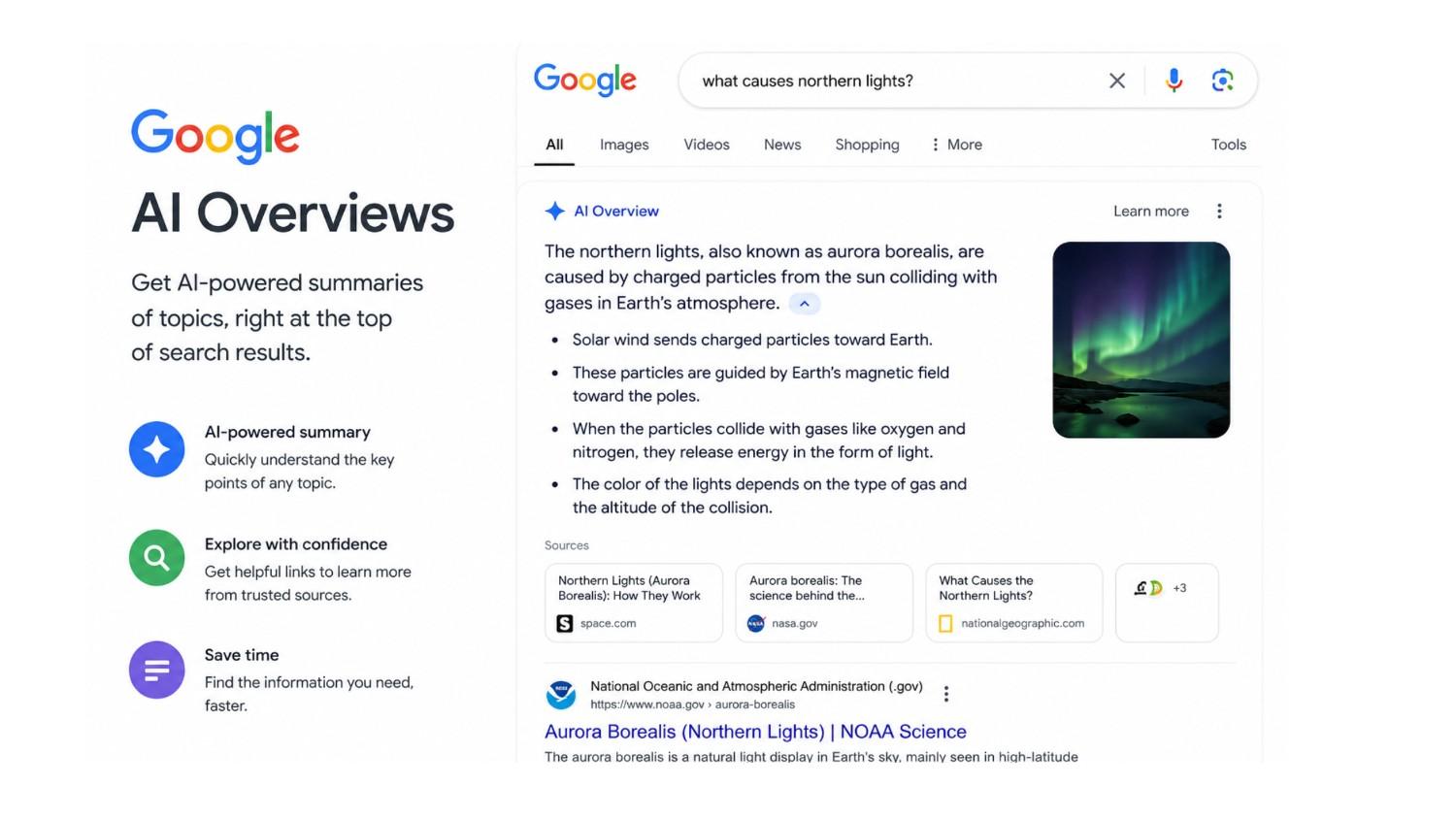
Google AI Overviews are AI-generated summaries that can appear within Search for certain queries.
Instead of requiring users to open several pages and combine information themselves, Google can provide a summary and supporting links that help them explore the subject further.
This changes the first interaction a user may have with a search result.
Traditional SEO often focused on:
Search → Ranking → Click → Website
AI-assisted search can introduce another step:
Search → AI answer → Supporting sources → Website
That means businesses should care not only about ranking but also about whether their content provides information that is useful enough to be surfaced as a supporting source.
Google has continued expanding AI Overviews and AI Mode, while emphasizing links that help users continue exploring the web.
Will AI Overviews Reduce Organic Search Traffic?
The answer is: it depends on the search and the type of content.
A simple informational query may be answered directly in an AI Overview. A complicated buying decision, local service search, product comparison, or problem requiring expertise may encourage users to explore several sources.
For example, someone searching:
“What is SEO?”
may be satisfied with a short explanation.
But someone searching:
“Which SEO strategy should a Pune-based B2B company use to generate qualified leads?”
has a much more specific problem.
They may want examples, pricing considerations, local experience, industry expertise, case studies, and recommendations.
That is where valuable websites can still earn attention.
Google has also reported that its AI search experiences are generating additional search activity and continuing to send users to websites, reinforcing that AI Search is not simply a replacement for the web.
What Does AI Overviews Mean for Businesses That Depend on SEO?
The biggest change is that SEO success is becoming broader than keyword position.
Rankings Still Matter
A strong organic ranking remains valuable. Google has not replaced its core search principles simply because AI features exist.
Technical SEO, crawlability, indexing, useful content, internal linking, page experience, and relevance still provide the foundation.
Search Intent Matters More
Businesses should stop creating content simply because a keyword has search volume.
Ask instead:
What problem is the searcher actually trying to solve?
A person searching “best digital marketing agency” may be comparing providers.
Someone searching “how much does SEO cost for a small business” is researching investment.
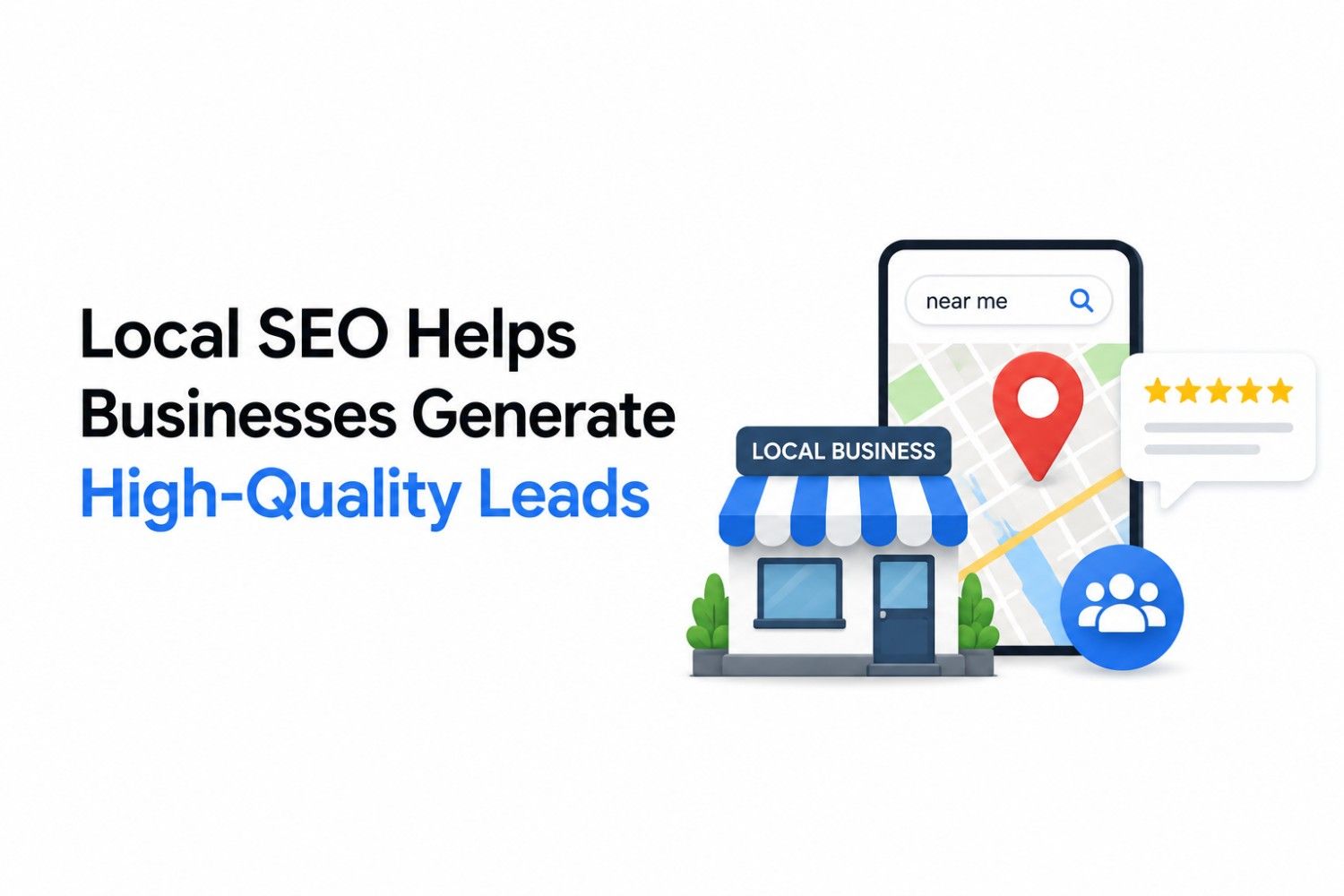
Someone searching “SEO agency near me” has stronger local intent.
The content should match that intent.
Topical Authority Matters
One generic article rarely demonstrates expertise.
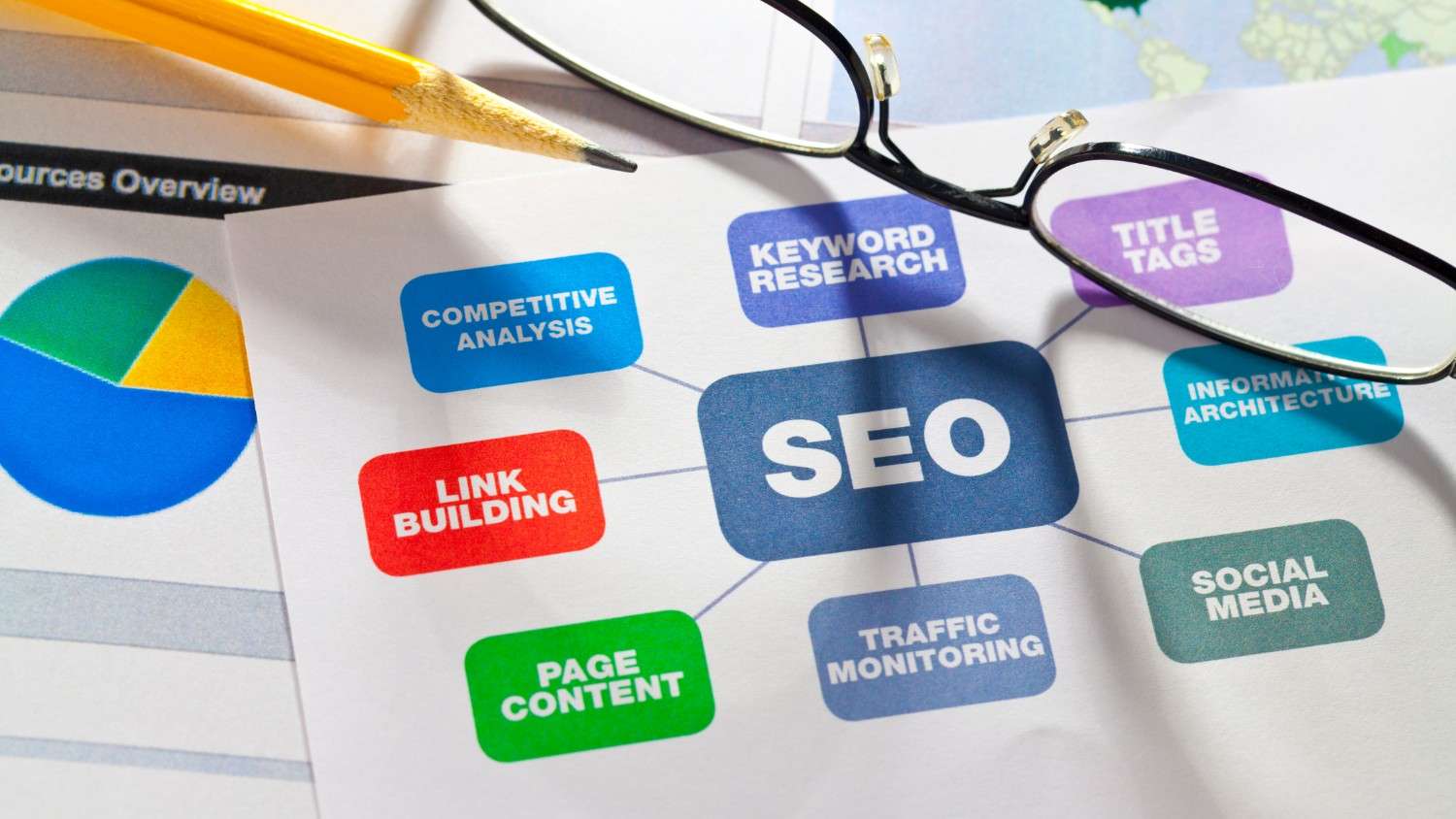
A business providing SEO services could build deeper authority around:
- Technical SEO
- Local SEO
- E-commerce SEO
- Content strategy
- Google Business Profile optimization
- AI search visibility
- SEO reporting
- Conversion optimization
A connected content ecosystem gives both users and search systems more context about what the business understands.
Top Technical SEO Mistakes That Can Hurt Your Website Rankings
What Kind of Content Can Perform Well in AI Search?
The easiest way to think about this is simple:
Don’t publish information that anyone could produce in five minutes.
Add something valuable.
That could be:
- First-hand experience
- Original research
- Industry examples
- Case studies
- Expert opinions
- Local market knowledge
- Original statistics
- Practical processes
- Real customer questions
- Clear comparisons
For example, instead of publishing another generic article titled:
“10 Benefits of SEO”
an experienced agency could publish:
“What We Learned From Improving Local SEO for Small Businesses in Pune.”
The second topic creates room for real observations, local search behavior, challenges, examples, and practical recommendations.
That is much harder to replace with a generic AI-generated paragraph.
Can AI Provide SEO Agency-Level Results?
This is where many businesses are confused by the phrase “AI provide SEO Agency.”
AI can assist with keyword research, content ideas, competitor analysis, outlines, data interpretation, content optimization, reporting, and repetitive SEO tasks.
But an AI tool alone is not the same as an experienced SEO agency.
A professional AI SEO agency in PCMC combines artificial intelligence with human strategy.
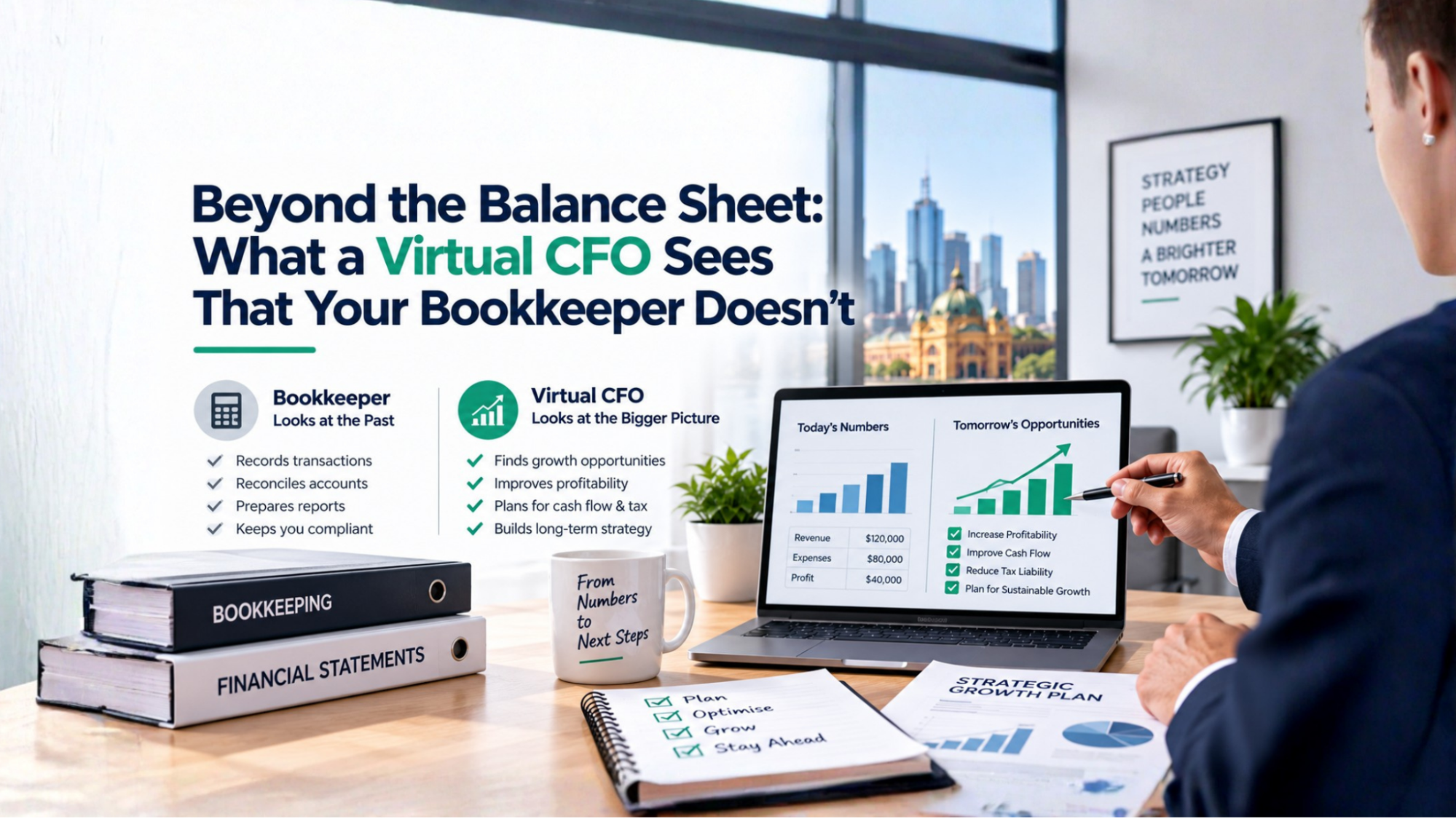
For example, AI can identify patterns in search data. An SEO professional still needs to decide whether those patterns make business sense.
AI can generate content suggestions. An experienced strategist needs to determine whether the content demonstrates genuine expertise and matches the audience.
AI can identify technical issues. A specialist needs to prioritize which problems actually affect crawling, indexing, user experience, or conversions.
The strongest approach is therefore not AI versus SEO professionals.
It is AI-assisted SEO guided by human expertise.
How Should Businesses Adapt Their SEO Strategy?
Businesses don’t need a completely new SEO playbook. They need a smarter one.
1. Answer Real Customer Questions
Build content around questions customers actually ask sales teams, support staff, and search engines.
2. Strengthen First-Hand Experience
Include examples from actual projects, industry observations, processes, and lessons learned.
3. Build Topic Clusters
Instead of publishing disconnected articles, create a group of related pages that cover a subject from different angles.
4. Make Answers Easy to Extract
Use descriptive headings, short paragraphs, lists, definitions, examples, and direct answers.
This helps readers scan content and makes important information easier for search systems to understand.
5. Strengthen Local Relevance
For businesses serving specific markets, generic national content may not be enough.
A digital marketing agency targeting Maharashtra, for example, can naturally discuss search behavior in Pune, Pimpri-Chinchwad, Mumbai, or other relevant markets when those locations genuinely matter.
Local relevance should come from useful context—not from repeatedly adding city names to every paragraph.
6. Measure Leads, Not Just Rankings
A keyword ranking is useful, but it is not the final business outcome.
Track:
- Qualified organic traffic
- Leads
- Conversion rates
- Branded searches
- Engagement
- Revenue
- Search visibility
Google has also been introducing additional insights for website owners around appearances in generative AI Search, giving businesses more ways to understand how their content is surfaced.
What Should Businesses Stop Doing?
AI-powered search makes low-value SEO tactics even less attractive.
Businesses should avoid:
- Publishing hundreds of similar AI-generated articles
- Repeating keywords unnaturally
- Creating content without original value
- Writing only for search engines
- Measuring success only through keyword rankings
- Creating pages for every minor keyword variation
- Assuming more content automatically means better visibility
The goal should be better content, not simply more content.
Does SEO Still Matter in the Age of AI Overviews?
Yes—probably more strategically than ever.
But SEO is moving beyond the old idea of getting a page to rank for one keyword.
Businesses now need to build a recognizable and trustworthy digital presence that can be discovered through different search journeys.
That includes traditional organic results, AI Overviews, AI Mode, local search, branded searches, voice queries, and other AI-assisted discovery experiences.
Google’s own guidance continues to emphasize that established SEO best practices remain relevant for its generative AI search features.
SEO Is Changing, Not Disappearing
Google AI Overviews are changing the way people discover information, but they do not mean businesses should walk away from organic search.
The smarter response is to build content that deserves attention.
Answer real questions. Share genuine experience. Strengthen topical authority. Make your website technically accessible. Understand local search behavior. And measure whether organic visibility is producing qualified business opportunities.
Businesses that treat AI Search as a reason to create better, more useful content will be in a stronger position than those simply trying to find another shortcut to page one.
If your website is losing organic visibility, struggling to build topical authority, or unsure how to adapt its SEO strategy for AI-powered search, review your current content and search strategy before changing everything. A focused SEO consultation can identify where your website is strong, where AI search may be changing user behavior, and which improvements are most likely to support sustainable organic growth.
Frequently Asked Questions
Will Google AI Overviews replace traditional SEO?
No. AI Overviews change how search results are presented, but SEO fundamentals such as useful content, technical accessibility, relevance, and authority remain important.
Can websites still receive traffic from Google AI Overviews?
Yes. AI search experiences can include links to supporting websites, giving useful pages opportunities to attract visitors who want more detailed information.
How can a business optimize content for AI Overviews?
Focus on clear answers, original information, strong topical coverage, first-hand experience, useful examples, and technically accessible web pages. Avoid trying to manipulate AI systems with keyword stuffing or artificial formatting.
Does ranking number one guarantee visibility in an AI Overview?
No. Traditional rankings and AI-generated search features are related but not identical. Businesses should think about overall search visibility rather than relying on a single ranking position.
Should businesses use AI for SEO?
Yes, when it is used responsibly. AI can support research, analysis, content planning, optimization, and reporting, but human expertise is still important for strategy, accuracy, originality, brand positioning, and business decisions.