


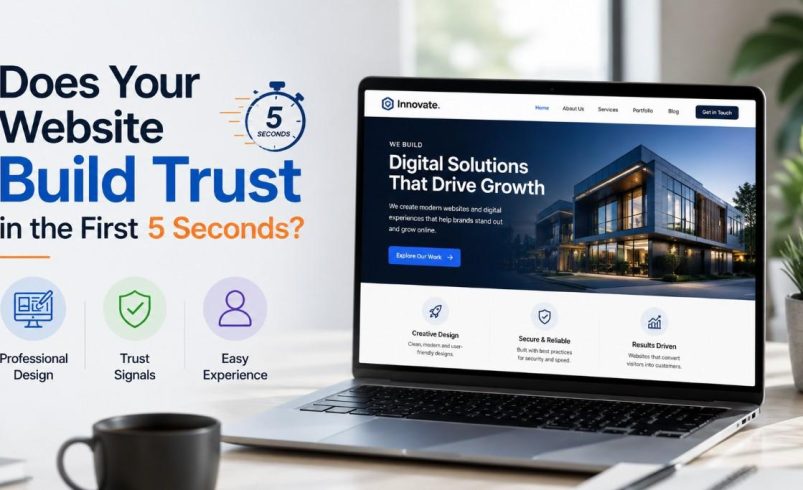
Summary – Yes, your website can influence trust within the first few seconds of a visitor’s arrival. Users quickly judge whether a business looks professional, credible, relevant, and easy to deal with based on its design, headline, loading speed, navigation, branding, security, reviews, and contact options. A trustworthy website does more than look attractive—it immediately tells visitors who you are, what you offer, why they should trust you, and what they should do next.
For businesses competing in markets such as Pune, Mumbai, Bengaluru, Delhi, and other Indian cities, this first impression can directly affect enquiries, purchases, bookings, and customer retention.
Why Do the First 5 Seconds of a Website Matter?
Imagine someone searches for a service on Google and opens your website. They do not immediately read every paragraph on the homepage. Instead, they quickly scan the page and form an initial opinion.
Is this a genuine business?
Does this company offer what I need?
Does the website look professional?
Can I easily contact them?
Can I trust the information?
These decisions often happen before the visitor consciously thinks about them.
A professional website therefore needs to communicate credibility immediately. This is particularly important for service-based businesses such as digital marketing agencies, construction companies, consultants, healthcare providers, real estate firms, manufacturers, educational institutions, and technology companies.
A website that creates uncertainty can lose a potential customer before the business gets an opportunity to explain its value.
What Does Website Trust Actually Mean?
Website trust refers to the confidence a visitor develops that a business is legitimate, professional, reliable, secure, and capable of delivering what it promises.
Trust is not created by one element. It comes from several signals working together, including:
- Professional website design
- Clear messaging
- Fast loading speed
- Easy navigation
- Consistent branding
- Customer reviews
- Testimonials and case studies
- Secure browsing
- Transparent contact information
- Helpful and accurate content
- Mobile-friendly functionality
A website can have excellent graphics and still feel untrustworthy if visitors cannot understand what the business does or find a way to contact it.
Can Visitors Really Judge a Website in Five Seconds?
Yes. Visitors commonly scan a webpage before deciding whether to continue exploring it.
The first screen is particularly important because it usually determines whether the visitor understands the business and sees a reason to stay.
Your above-the-fold section should answer three basic questions quickly:
What do you offer? Who do you help? Why should someone choose you?
For example, a vague headline such as “Transforming Businesses Through Innovation” does not tell a visitor much.
A clearer headline such as “Digital Marketing Services for Growing Businesses in Pune” immediately communicates the service and target audience.
This type of clarity is valuable not only for users but also for search engines and AI-powered answer systems because the subject and context of the page are easier to understand.
What Website Elements Build Trust Immediately?
1. A Professional and Modern Design
Design is often the first visual signal visitors notice.
A clean layout, readable typography, appropriate images, consistent colours, and balanced spacing can make a business appear more established.
However, professional does not mean complicated. A simple website with clear navigation can create more confidence than an overloaded homepage filled with animations, banners, and unnecessary pop-ups.
2. A Clear Value Proposition
Visitors should not have to figure out what your company does.
Your main headline should communicate your core offering clearly. Supporting text can then explain the problem you solve, the audience you serve, or the benefit customers can expect.
This is especially important for businesses targeting competitive local searches such as digital marketing services in Pune, website development in Mumbai, or IT services in Bengaluru.
3. Consistent Branding
Your website should feel connected to your wider business identity.
Your logo, colours, typography, imagery, messaging, social profiles, and other brand assets should present a consistent identity.
When visitors see the same branding across Google, social media, your website, and other online platforms, it becomes easier to recognize the business and develop familiarity.
4. Easy Navigation
A visitor should not have to search through multiple pages to find basic information.
A simple navigation structure might include:
Home → About → Services → Case Studies → Blog → Contact
Important actions such as “Get a Quote,” “Book a Consultation,” or “Contact Us” should also be easy to find.
Good navigation reduces friction and gives visitors confidence that the business is organized.
5. Fast Website Performance
A slow website can damage trust before the visitor even sees your content.
If pages take too long to load, users may assume the website is poorly maintained or simply leave.
Website performance should therefore be treated as part of credibility, not just a technical SEO task. Optimizing images, reducing unnecessary scripts, improving hosting performance, and monitoring Core Web Vitals can create a smoother experience.
6. Mobile-Friendly Design
A large portion of website traffic in India comes from smartphones. That makes mobile experience particularly important for local businesses.
A trustworthy mobile website should have:
- Readable text
- Properly sized buttons
- Simple menus
- Fast-loading pages
- Easy-to-complete forms
- Clickable phone numbers
- Convenient contact options
A website that looks excellent on a desktop but breaks on a smartphone can quickly lose credibility.
How Do Reviews and Social Proof Build Instant Credibility?
Visitors naturally want evidence that other people have trusted the business.
Customer reviews, testimonials, client logos, case studies, awards, certifications, and measurable results can reduce uncertainty.
For example, a marketing company claiming to generate business growth becomes more credible when it shows relevant case studies explaining the challenge, strategy, and outcome.
The important point is authenticity. Avoid filling a website with exaggerated claims such as “best company” or “number one provider” without evidence.
Specific proof is generally more persuasive than broad claims.
What Makes a Website Look Untrustworthy?
Some problems can immediately create doubt.
Common examples include:
- Outdated design
- Broken links
- Spelling and grammar errors
- Poor-quality images
- Excessive pop-ups
- Confusing navigation
- Missing contact information
- Unclear service descriptions
- Slow loading pages
- Poor mobile experience
- Inconsistent branding
- Fake-looking testimonials
- Aggressive sales messages
Consider a local business searching for customers in Pune or Pimpri-Chinchwad. If a visitor finds outdated contact information, broken pages, or a website that does not work properly on mobile, they may simply choose another provider.
The competitor does not necessarily need to offer a better service. A better digital experience may be enough to win the initial enquiry.
How Can You Test Your Website’s 5-Second Trust Factor?
There is a simple practical test.
Show your homepage to someone who does not know your business. Give them five seconds to look at it, then ask:
- What does this company do?
- Who do you think they serve?
- What stood out to you?
- Did the website look trustworthy?
- What would you click next?
If the person cannot answer the first two questions, your messaging probably needs improvement.
You can also review website analytics to identify pages with high exits, poor engagement, or weak conversion performance. Combining user feedback with analytics provides a much stronger basis for website improvements than redesigning based purely on personal preference.
How Does Website Trust Affect SEO and AI Search?
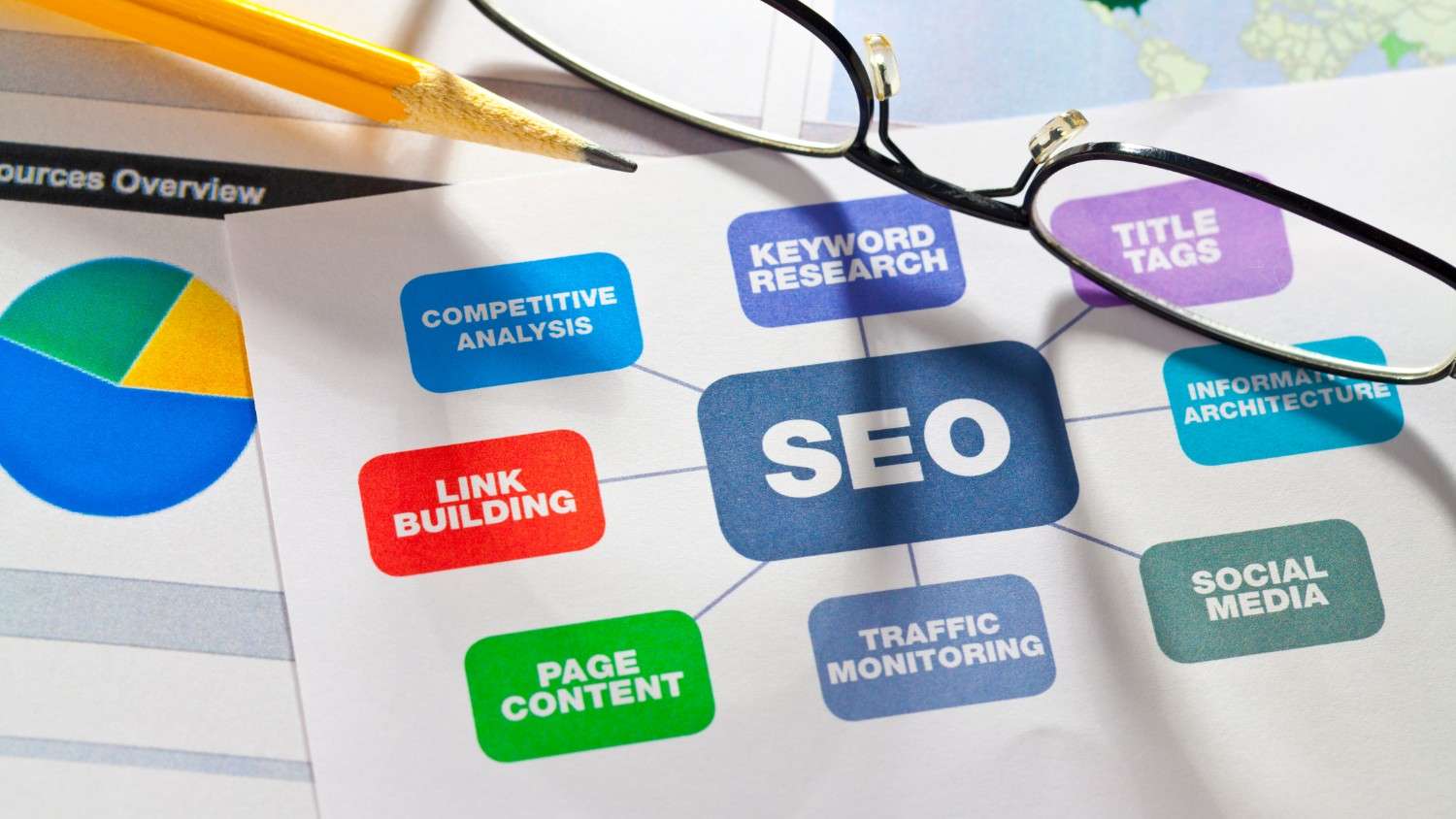
Website trust and SEO are closely connected through content quality, usability, technical performance, and overall credibility.
A well-structured website makes it easier for users and search systems to understand the business. Clear headings, descriptive content, relevant internal links, structured information, accurate business details, and strong topical coverage can also help search engines interpret the website.
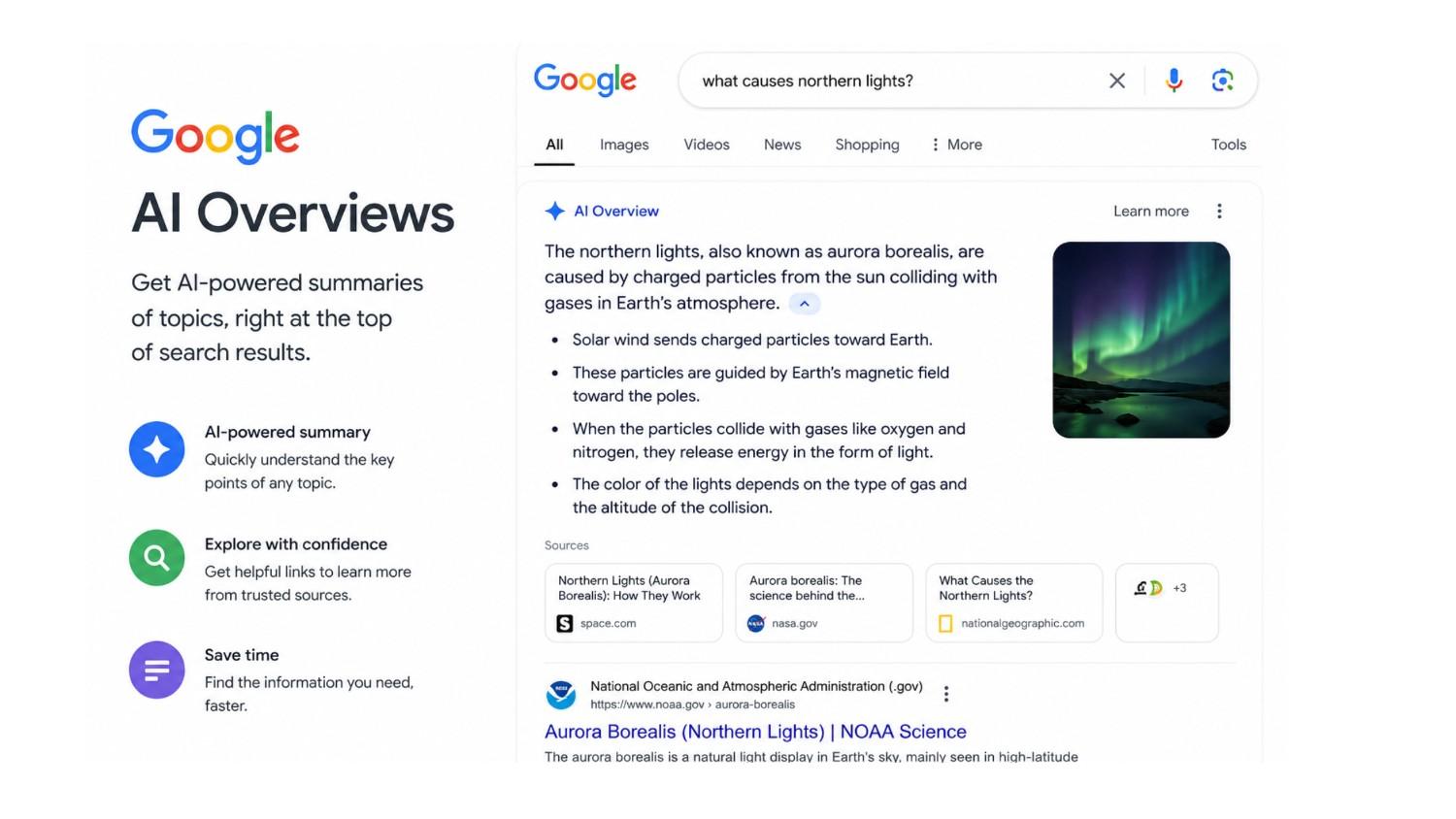
For AI-powered search and answer engines, clarity is particularly valuable. Content should provide direct answers, explain concepts naturally, and establish clear relationships between the business, its services, locations, expertise, and audience.
For example, a local business serving Pune should clearly communicate its relevant services and service areas rather than inserting city names repeatedly into every paragraph.
That approach creates stronger local relevance without keyword stuffing.
Does Your Homepage Pass the 5-Second Test?
Before investing in a complete redesign, review your homepage from a first-time visitor’s perspective.
Ask yourself:
Can visitors understand the business immediately?
Can they identify the main service?
Can they see evidence that the business is credible?
Can they easily find contact information?
Does the website work properly on mobile?
Does the page load quickly?
If the answer to several of these questions is “no,” your website may be creating unnecessary barriers between visitors and conversions.
7 Practical Ways to Build Website Trust
Start with improvements that have a direct impact:
- Rewrite your main headline so visitors immediately understand your offering.
- Simplify navigation and remove unnecessary menu options.
- Improve page speed by optimizing images, scripts, and technical elements.
- Strengthen mobile UX so visitors can browse and contact you easily.
- Add genuine social proof such as reviews, testimonials, and relevant case studies.
- Make contact information visible instead of hiding it at the bottom of the website.
- Review your website regularly for outdated information, broken links, design issues, and inaccurate claims.
These changes do not always require a complete website rebuild. Sometimes improving the homepage message, navigation, speed, and trust signals can make a noticeable difference.
Your Website Gets the First Chance to Earn the Customer
Your website does not get unlimited time to convince a visitor. The first few seconds can determine whether someone explores your services, contacts your business, or returns to Google and chooses another option.
Trust comes from the complete experience: clear messaging, professional design, fast performance, mobile usability, genuine proof, transparent information, and an easy path to contact you.
So, open your website today and look at it as someone who has never heard of your business. Can they understand what you do, believe your claims, and know what to do next within a few seconds?
If the answer is not a confident yes, it may be time to improve your website before spending more money trying to drive traffic to it. Review your website, identify the trust gaps, and speak with a professional website or digital marketing team to turn those first five seconds into a genuine opportunity for engagement and conversion.
Frequently Asked Questions
How quickly do visitors judge a website?
Visitors can form an initial impression within seconds. The first screen, design, messaging, speed, and overall usability can influence whether they continue exploring.
What makes a website trustworthy?
A trustworthy website usually combines professional design, clear information, strong branding, customer evidence, secure browsing, easy navigation, accurate business details, and a good mobile experience.
Does website design affect customer conversions?
Yes. Poor design can create friction and uncertainty, while clear layouts, strong calls to action, useful content, and intuitive navigation can make it easier for visitors to take the next step.
How can I improve my website's first impression?
Start by reviewing your above-the-fold content, website speed, mobile experience, navigation, branding, testimonials, and calls to action. Then test the homepage with people unfamiliar with your business.
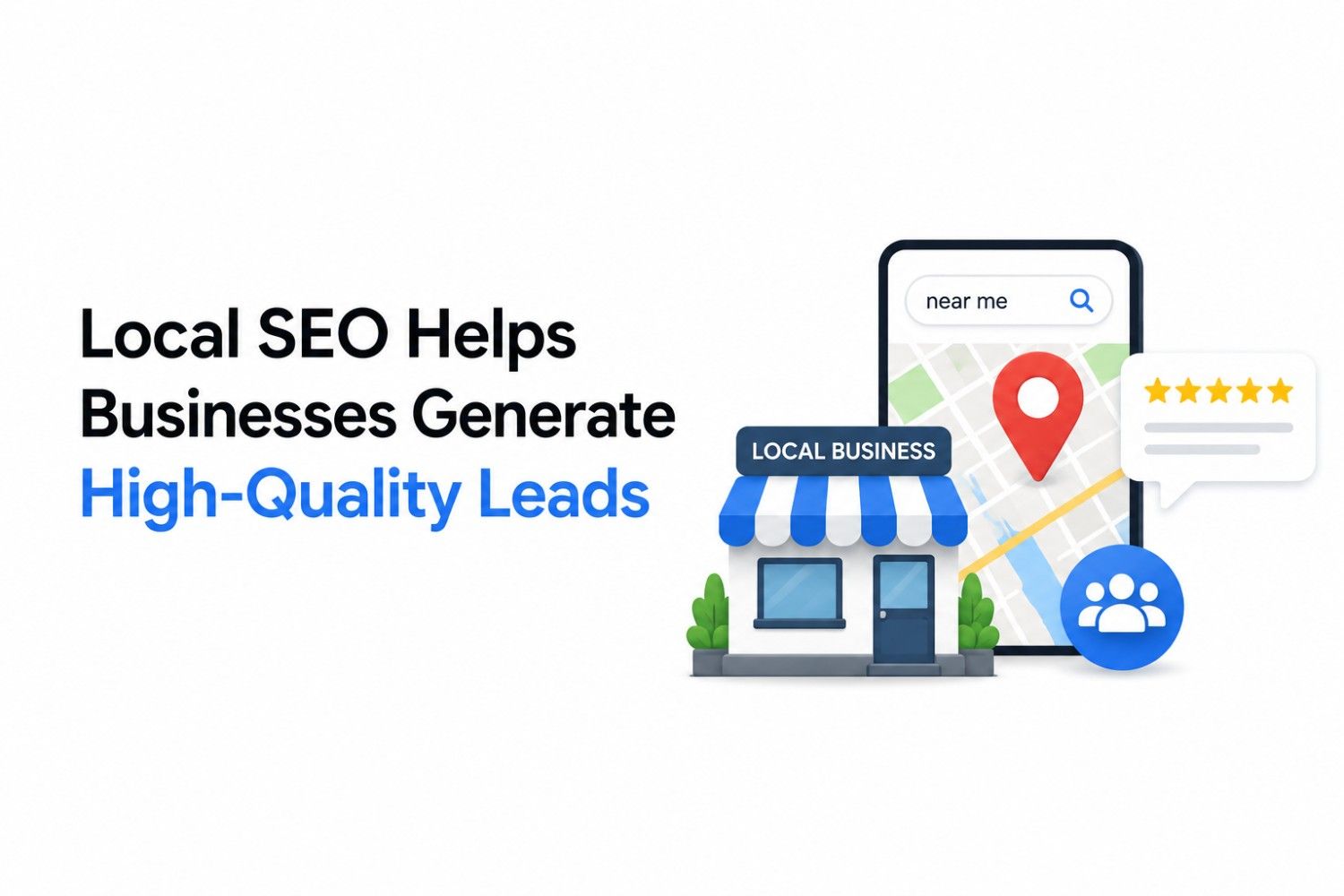
Does website trust matter for local businesses?
Absolutely. For local searches, customers often compare several businesses before making an enquiry. A professional website with clear location, service, contact, and credibility information can help a business stand out.