



Summary – DLT compliance has completely changed the way businesses send transactional SMS in India. Today, companies must follow TRAI guidelines, register their business details, approve SMS headers, and get message templates verified before sending important communication like OTPs, payment alerts, and service notifications.
For businesses, DLT compliance directly impacts SMS delivery, customer trust, security, and communication efficiency. A properly compliant SMS system helps avoid message failures, reduces spam-related issues, and ensures customers receive important updates without interruptions.
What Is DLT Compliance for Transactional SMS in India?
DLT (Distributed Ledger Technology) compliance is a regulatory system introduced by the Telecom Regulatory Authority of India (TRAI) to make business SMS communication safer, more transparent, and more reliable.
Before DLT regulations were introduced, businesses could send bulk SMS messages with limited verification. This resulted in problems like spam messages, fake sender identities, and unwanted communications reaching customers.
To solve these issues, DLT created a verified communication process where businesses, telecom operators, and SMS service providers work together to ensure that only approved and genuine messages reach customers.
For businesses across India, especially in industries like banking, fintech, healthcare, e-commerce, education, and real estate, following DLT compliance is now a necessary part of customer communication.
Why Was DLT Introduced for SMS Communication in India?
The main goal behind DLT compliance is to create a more secure and trusted SMS ecosystem for businesses and customers.
TRAI introduced DLT regulations to:
- Reduce spam and fraudulent SMS messages
- Protect customers from fake communications
- Verify businesses sending messages
- Improve transparency in business messaging
- Build trust between brands and customers
For example, when a customer receives an OTP from a bank or online payment platform, DLT helps ensure that the message is sent from a verified business using an approved communication format.
How Does DLT Compliance Work for Transactional SMS?
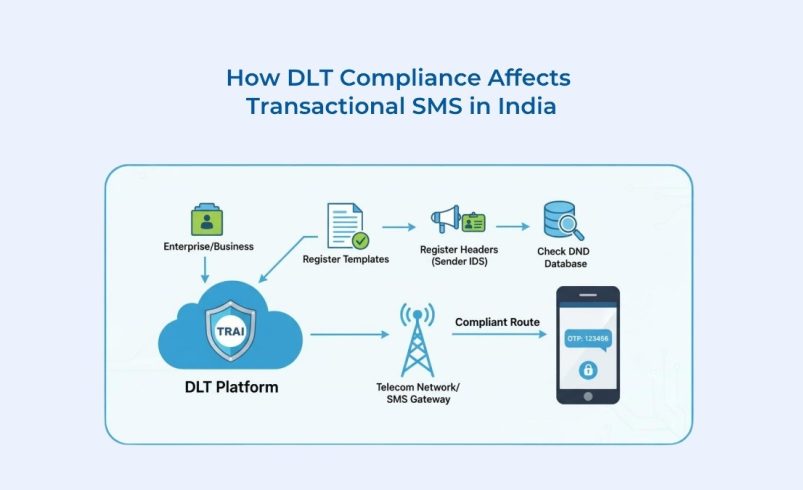
DLT compliance follows a structured process that businesses need to complete before sending SMS messages.
Business Registration on DLT Platform
The first step is registering the business as a Principal Entity (PE).
Companies need to submit their business information and complete verification through telecom-approved DLT platforms.
After approval, businesses can register:
- Sender IDs (Headers)
- SMS templates
- Consent records
- Customer communication preferences
This registration process ensures that only authorized businesses can send commercial messages.
What Is a DLT Header and Why Is It Important?
A DLT header is the approved sender identity that appears when customers receive an SMS.
For example:
A financial institution may use a registered sender name like:
“BANKXX”
This helps customers recognize that the message is coming from an authentic organization.
If businesses send SMS using an unregistered sender ID, messages may get rejected or fail to reach customers.
Why Are SMS Templates Important Under DLT Compliance?
Under DLT regulations, every transactional SMS template must be registered and approved before sending messages.
A template defines the approved structure and purpose of the message.
Example of an approved transactional SMS:
“Your OTP for login is 458921. Please do not share this code with anyone.”
Example of a message that would not qualify as transactional:
“Congratulations! Get exclusive offers today. Click here.”
The second message contains promotional content, so it cannot be sent under the transactional SMS category.
Businesses must make sure that the actual SMS content matches the approved template. Even small changes can impact message delivery.
How DLT Compliance Impacts Transactional SMS Delivery?
DLT compliance has a direct impact on whether important business messages successfully reach customers.
Better Message Delivery Reliability
When messages follow DLT rules, they move smoothly through telecom networks.
This is especially important for industries where timing matters.
For example, when a customer completes an online payment, they expect an instant confirmation message. A delayed transaction alert can create confusion and reduce customer confidence.
Increased Customer Trust
Customers are more likely to trust messages from verified senders.
A registered sender identity helps users identify genuine communication and reduces the risk of phishing attempts and fake SMS messages.
What Types of Messages Are Considered Transactional SMS?
Transactional SMS refers to messages that are sent because of a customer action, account activity, or service requirement.
Common examples include:
Banking and Financial Alerts
- OTP messages
- Transaction confirmations
- Account updates
- Fraud alerts
E-commerce Notifications
- Order confirmation
- Payment updates
- Shipping details
- Delivery status notifications
Healthcare Communication
- Appointment reminders
- Test report notifications
- Healthcare service updates
Education Updates
- Admission notifications
- Exam reminders
- Student communication
Real Estate Communication
- Customer inquiry updates
- Site visit confirmations
- Project-related notifications
How DLT Compliance Affects Different Industries in India?
Banking and Fintech Sector
Banks and fintech companies depend heavily on transactional SMS for customer verification and updates.
A failed OTP or delayed transaction message can directly affect the customer experience.
DLT compliance helps these businesses maintain secure and dependable communication.
E-commerce Businesses
Online businesses use SMS at multiple stages of the customer journey.
From order confirmation to delivery updates, every message requires accurate and timely communication.
DLT-approved templates help businesses maintain consistent customer communication.
Healthcare Organizations
Healthcare providers use SMS for important reminders and updates.
Appointment reminders, medical reports, and service notifications require reliable delivery to avoid communication gaps.
Common DLT Compliance Challenges Businesses Face
While DLT improves SMS communication, businesses may face some operational challenges.
Template Approval Delays
Incorrect formatting, unclear content, or missing details can result in template rejection.
Template Mismatch Problems
If the actual SMS content does not match the approved template, telecom operators may block the message.
Managing Multiple Templates
Large organizations often require hundreds of SMS templates for different customer communication needs.
Continuous Compliance Monitoring
Businesses need to regularly review their SMS process to maintain compliance.
How Businesses Can Maintain DLT Compliance Successfully?
Businesses can follow these practical steps to manage DLT compliance effectively:
Complete Business Registration
Register the organization and complete the required verification process.
Register Headers and Templates
Make sure all sender IDs and SMS formats are approved before sending messages.
Work With a Reliable SMS Technology Partner
A trusted SMS Notifications Service Provider can help businesses manage DLT requirements, automate messaging workflows, integrate SMS APIs, and improve communication reliability.
Track Delivery Reports
Monitoring SMS performance helps businesses identify delivery issues and improve customer communication.
Update Templates Regularly
Businesses should review their SMS templates whenever communication requirements change.
Role of CPaaS Platforms in DLT-Compliant Transactional SMS
CPaaS (Communication Platform as a Service) platforms help businesses manage customer communication through automation and APIs.
A DLT-compliant CPaaS solution can provide:
- Simple SMS API integration
- Automated template management
- Delivery tracking
- Scalable messaging infrastructure
- Enterprise communication support
For companies sending large volumes of SMS every month, CPaaS platforms reduce complexity and make compliance management easier.
How Businesses in India Can Prepare for the Future of Transactional SMS?
Transactional SMS will continue to remain an important communication channel for businesses.
Companies should focus on:
- Maintaining DLT compliance
- Creating better customer communication strategies
- Combining SMS with channels like WhatsApp, RCS, and voice
- Using automation for customer notifications
- Tracking communication performance
Businesses that build a strong messaging foundation today can create smoother customer experiences in the future.
Build Reliable Customer Communication With DLT-Compliant SMS
DLT compliance has changed transactional SMS in India by creating a more secure, transparent, and reliable messaging environment.
For businesses, compliance is not only about following regulations. It is about ensuring customers receive important updates at the right time with confidence.
Whether you operate in banking, fintech, e-commerce, healthcare, education, or real estate, having a strong DLT-compliant SMS strategy can improve communication quality and customer experience.
If your business needs help managing transactional SMS compliance, automation, and delivery performance, connect with a reliable messaging partner to build a smarter and more effective customer communication system.
Frequently Asked Questions About DLT Compliance and Transactional SMS
Is DLT registration mandatory for sending transactional SMS in India?
Yes. Businesses sending SMS communication in India must comply with TRAI regulations by registering their entity, sender headers, and templates.
Does DLT affect OTP SMS delivery?
Yes. OTP messages must be sent through approved routes with registered templates to ensure successful delivery.
What happens if a business sends SMS without DLT compliance?
Messages may be delayed, rejected, or blocked by telecom operators.
Can promotional messages be sent as transactional SMS?
No. Promotional content cannot be sent through transactional SMS routes and must follow separate messaging regulations.
How can businesses improve DLT SMS delivery rates?
Businesses should use approved templates, maintain content accuracy, and work with reliable SMS infrastructure providers.