



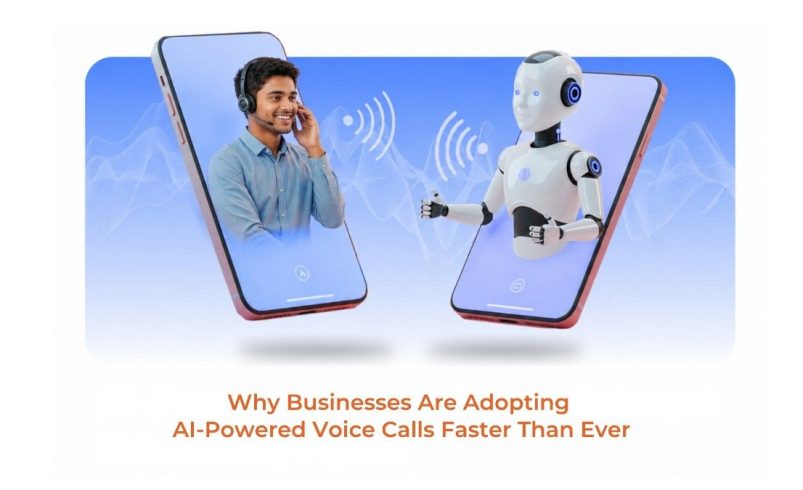
Summary – AI-powered voice calls are becoming a major business communication solution because companies need faster customer engagement, better service experiences, and more efficient ways to manage conversations at scale. Unlike traditional IVR systems and manual calling processes, AI voice technology can understand customer needs, respond naturally, automate repetitive tasks, and provide support around the clock. Businesses across industries such as banking, healthcare, real estate, retail, and education are adopting AI voice calling to improve customer satisfaction, reduce operational costs, and create more personalized customer interactions.
For years, phone calls have been one of the most important ways businesses connect with customers. Even today, many customers prefer speaking with a company when they need quick support, clarification, or personalized assistance.
However, traditional calling methods come with several challenges. Long waiting times, limited support hours, repetitive conversations, and high call center costs often create friction for both businesses and customers.
This is where AI-powered voice calls are changing the way companies communicate.
Modern AI voice solutions allow businesses to automate customer conversations while still creating a natural and engaging experience. Instead of forcing customers to move through complicated IVR menus, AI voice assistants allow people to simply explain what they need and receive relevant responses instantly.
From businesses in Mumbai and Bengaluru managing customer support operations to global companies handling millions of conversations every month, AI voice technology is becoming an important part of modern customer communication strategies.
The growth of AI-powered voice calls is not only about reducing manual work. It is about creating faster, smarter, and more meaningful conversations between businesses and their customers.
What Are AI-Powered Voice Calls?
AI-powered voice calls are automated phone conversations managed by artificial intelligence systems that can understand spoken language, identify customer requirements, and respond in a human-like way.
Unlike traditional automated calling systems that depend on fixed scripts, AI voice assistants use advanced technologies such as:
- Natural Language Processing (NLP)
- Speech recognition
- Machine learning
- Generative AI models
- Text-to-speech technology
These technologies help AI systems understand the actual meaning behind a customer’s words instead of only responding to specific commands.
For example, a traditional IVR system may ask:
“Press 1 for billing. Press 2 for support.”
But an AI voice assistant can understand a customer saying:
“I was charged twice for my payment. Can you help me check this?”
The system can identify the issue, verify customer details, and guide the customer toward the right solution.
This ability to have natural conversations is one of the biggest reasons businesses are adopting AI voice technology faster than ever.
Why Are Businesses Adopting AI-Powered Voice Calls Faster Than Ever?
1. Customers Expect Faster and More Personalized Support
Customer expectations have changed. People want quick answers and convenient communication without unnecessary delays.
When customers contact a bank, healthcare provider, online store, or real estate company, they expect a smooth experience instead of waiting several minutes or repeating the same information multiple times.
AI voice calls help businesses deliver:
- Faster responses
- 24/7 customer availability
- Personalized conversations
- Quick issue resolution
For example, healthcare providers can use AI voice assistants to remind patients about appointments, answer common questions, and collect basic information before connecting them with support staff.
This improves the overall customer experience while helping employees focus on more important tasks.
2. Businesses Want to Reduce Operational Costs
Running a large customer support team requires significant investment in:
- Employee salaries
- Training
- Infrastructure
- Quality monitoring
- Shift management
AI-powered voice calls help businesses reduce the workload on human teams by managing repetitive and routine conversations automatically.
Businesses can use AI voice systems for:
- Appointment reminders
- Payment notifications
- Customer surveys
- Lead qualification
- Order updates
- Common support queries
Instead of replacing human agents, AI allows teams to focus on conversations that need human understanding, empathy, and problem-solving.
This creates a better balance between automation and human support.
3. AI Voice Calls Help Businesses Manage High Call Volumes
Many businesses experience sudden increases in customer conversations during:
- Product launches
- Promotional campaigns
- Festive seasons
- Service issues
- Marketing activities
Traditional call centers often struggle during these periods because hiring and training additional agents takes time.
AI voice technology helps businesses manage large numbers of conversations simultaneously without increasing workforce pressure.
For example, a retail brand running a festive campaign in India can use AI voice calls to contact customers, share offers, answer basic questions, and collect feedback without overwhelming customer service teams.
4. AI Voice Technology Creates More Human-Like Conversations
One of the biggest improvements in AI voice technology is how natural conversations have become.
Earlier automated calling systems often sounded robotic and could only handle limited responses.
Modern AI voice assistants can:
- Understand different accents
- Recognize conversational variations
- Maintain context during discussions
- Provide more natural responses
This is especially useful in countries like India, where businesses communicate with customers across multiple languages and regional preferences.
AI voice solutions can support multilingual communication, helping businesses connect with wider audiences.
5. Generative AI Is Accelerating Voice Automation
Generative AI has significantly improved the capabilities of voice technology.
Earlier systems mainly relied on predefined scripts. Today, AI models can generate responses based on customer questions and business information.
For example, if a customer asks:
“Can I change my loan repayment date?”
A modern AI voice assistant can provide a personalized response instead of directing the customer through multiple options.
Generative AI is helping businesses create smarter voice assistants that can manage more detailed and complex conversations.
How Do AI-Powered Voice Calls Work?
AI-powered voice calls work through multiple intelligent steps:
Step 1: Customer Speaks
The customer explains their requirement through a phone conversation.
Step 2: Speech Recognition Converts Voice Into Data
The AI system converts spoken words into text that it can understand.
Step 3: AI Identifies Customer Intent
The system analyzes the conversation and understands what the customer needs.
Step 4: AI Generates the Right Response
The AI creates a response based on customer information, business rules, and available data.
Step 5: Text-to-Speech Delivers the Answer
The response is converted back into natural-sounding speech.
The entire process happens within seconds, allowing businesses to provide faster and smoother customer experiences.
Key Benefits of AI-Powered Voice Calls for Businesses
Improved Customer Experience
AI voice assistants reduce waiting time and provide instant communication.
Customers can get answers quickly without dealing with complicated menus.
Increased Team Productivity
Employees spend less time handling repetitive questions and more time managing complex customer situations.
Better Lead Generation and Sales Opportunities
AI voice calls help businesses:
- Contact potential customers
- Qualify leads
- Schedule appointments
- Follow up automatically
Faster responses help businesses improve customer engagement and increase conversion opportunities.
Better Customer Insights
AI voice systems can analyze conversations and identify:
- Customer preferences
- Common problems
- Buying behavior
- Satisfaction levels
These insights help businesses improve their services and customer strategies.
Industries Adopting AI-Powered Voice Calls
Banking and Financial Services
Banks use AI voice calls for:
- Transaction notifications
- Payment reminders
- Customer verification
- Account support
Healthcare
Healthcare organizations use AI voice technology for:
- Appointment scheduling
- Patient reminders
- Follow-up communication
- Basic information support
Real Estate
Real estate companies use AI voice assistants to:
- Follow up with property inquiries
- Identify serious buyers
- Schedule property visits
In competitive markets like Mumbai, Delhi, Bengaluru, and Pune, quick lead response can make a major difference in conversions.
E-commerce and Retail
Retail companies use AI voice calls for:
- Order updates
- Customer support
- Feedback collection
- Promotional campaigns
Education
Educational institutions use AI calling for:
- Admission inquiries
- Student communication
- Reminder notifications
AI Voice Calls vs Traditional Call Centers
|
Traditional Call Centers |
AI-Powered Voice Calls |
|
Limited operating hours |
Available 24/7 |
|
Requires more employees for scaling |
Handles large volumes automatically |
|
Longer customer waiting time |
Faster responses |
|
Script-based conversations |
Intelligent conversations |
|
Higher operating expenses |
Better cost efficiency |
AI voice technology is not designed to completely replace human agents. Instead, it helps businesses create a more efficient communication system.
AI Voice Calls vs Traditional IVR Systems
Traditional IVR systems often create frustration because customers must select options from fixed menus.
With AI Voice Calls vs Traditional IVR Systems, the difference is clear: AI voice systems create a more natural experience by understanding customer intent.
Instead of:
“Press 1 for sales, Press 2 for support”
Customers can simply explain their problem.
This improves customer satisfaction and creates smoother interactions.
How Businesses Can Use Outbound Voice Calls Services to Improve Customer Engagement?
Outbound communication continues to play an important role in sales, customer retention, and business growth.
Modern Outbound Voice Calls Services powered by AI help businesses automate customer outreach while maintaining personalized conversations.
Common applications include:
- Lead follow-ups
- Appointment reminders
- Customer feedback collection
- Payment notifications
- Promotional campaigns
- Renewal reminders
For businesses operating in competitive markets, AI-powered outbound calling helps improve response speed and ensures customers receive timely communication.
Challenges Businesses Should Consider Before Implementing AI Voice Calls
Data Privacy and Security
Businesses need strong security practices to protect customer information.
Maintaining Conversation Accuracy
AI systems require proper training and monitoring to deliver reliable responses.
Connecting AI With Human Support
Customers should always have an option to speak with human representatives when needed.
Following Communication Regulations
Businesses must ensure compliance with communication guidelines and customer consent requirements.
Best Practices for Implementing AI Voice Calling
Start With Clear Business Goals
Identify the communication challenges AI should solve.
Begin With Repetitive Processes
Start with tasks such as reminders, FAQs, and follow-ups.
Connect AI With Existing Business Systems
Integrate AI voice solutions with:
- CRM platforms
- Customer databases
- Support systems
Improve Through Continuous Monitoring
Review conversations regularly and improve AI performance over time.
The Future of AI-Powered Voice Calls
AI voice technology will continue becoming smarter and more capable.
Businesses will increasingly use AI voice systems for:
- Personalized sales conversations
- Multilingual support
- Customer onboarding
- Automated business assistance
Companies that adopt AI voice technology early can improve customer experience, increase efficiency, and build stronger communication strategies.
Build Better Customer Conversations With AI Voice Technology
AI-powered voice calls are becoming an essential communication tool for businesses that want to improve customer experience, automate repetitive processes, and create faster engagement.
Whether a business wants to improve support operations, increase sales opportunities, or manage customer communication at scale, AI voice technology provides a smarter way to connect.
Companies looking to transform their customer communication strategy can explore AI voice solutions and identify opportunities where intelligent automation can create measurable business results.
Frequently Asked Questions
What are AI-powered voice calls?
AI-powered voice calls are automated conversations managed by artificial intelligence that understand customer requests and provide natural responses.
Are AI voice calls replacing human agents?
No. AI voice calls support human teams by managing repetitive tasks while human agents handle complex customer interactions.
Which industries benefit from AI voice calling?
Industries such as banking, healthcare, real estate, retail, education, and hospitality use AI voice technology.
Can AI voice calls support multiple languages?
Yes. Modern AI voice systems can support multilingual conversations, making them useful for diverse customer groups.
Are AI voice calls better than IVR?
Yes. AI voice calls provide more natural conversations because they understand customer intent instead of relying only on fixed menus.
How can businesses start using AI voice technology?
Businesses should identify repetitive communication tasks, select the right AI solution, integrate it with existing systems, and track performance.