
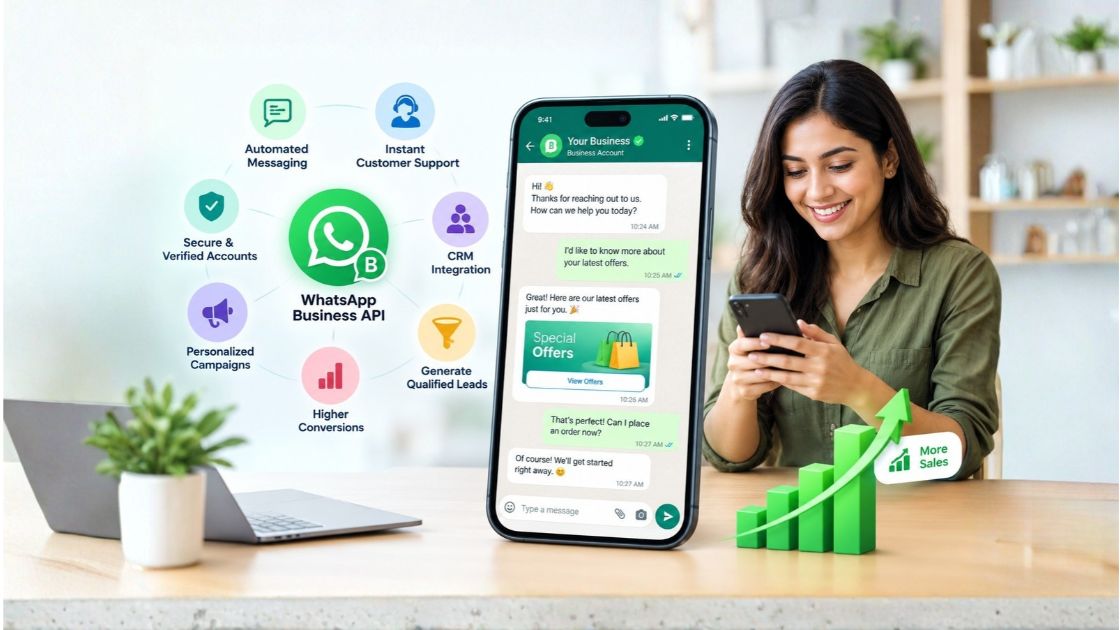
Summary – WhatsApp Business API helps businesses across India improve customer engagement, generate qualified leads, and increase sales through automated messaging, personalized communication, AI chatbots, and CRM integration. It enables businesses to respond to customer enquiries faster, share product updates, automate sales follow-ups, and provide real-time support. By choosing the right WhatsApp Business API Provider, businesses can simplify customer communication, improve buying experiences, and build stronger customer relationships.
Customers today expect quick responses, personalized communication, and convenient ways to connect with businesses. Whether they are enquiring about a product, checking an order status, or requesting service information, a smooth communication experience can influence their buying decisions.
WhatsApp Business API helps businesses manage customer conversations, automate responses, generate leads, and improve sales through personalized messaging, AI chatbots, and CRM integration. For businesses across India, choosing the right WhatsApp Business API Provider can make it easier to streamline customer communication, improve support, and turn more enquiries into sales opportunities.
Why Are Businesses Using WhatsApp for Customer Engagement?
Customers today expect quick responses, personalized recommendations, and convenient ways to communicate with businesses. Whether someone enquires about a product, requests a service quotation, or checks an order status, delayed responses can affect their buying decisions.
WhatsApp Business API provides businesses with a scalable way to manage these conversations. Unlike the regular WhatsApp Business App, the API supports advanced automation, multiple agent access, CRM integration, and high-volume business messaging.
For example, an e-commerce customer can receive an order confirmation immediately after purchasing, followed by shipping updates and delivery notifications. Similarly, a real estate company can automatically respond to property enquiries and connect interested buyers with its sales team.
Businesses can also explore how companies use WhatsApp for customer support to improve communication and manage sales conversations more efficiently.
How Does WhatsApp Business API Improve Customer Engagement?
WhatsApp Business API makes customer communication more convenient by allowing businesses to send relevant messages at different stages of the customer journey.
Some practical applications include:
- Instant customer support: Automatically respond to common questions about products, services, pricing, and business hours.
- Personalized communication: Share relevant offers, recommendations, and updates based on customer interests and consent.
- Order notifications: Send purchase confirmations, payment updates, shipping information, and delivery alerts.
- Appointment reminders: Notify customers about upcoming appointments, consultations, and scheduled services.
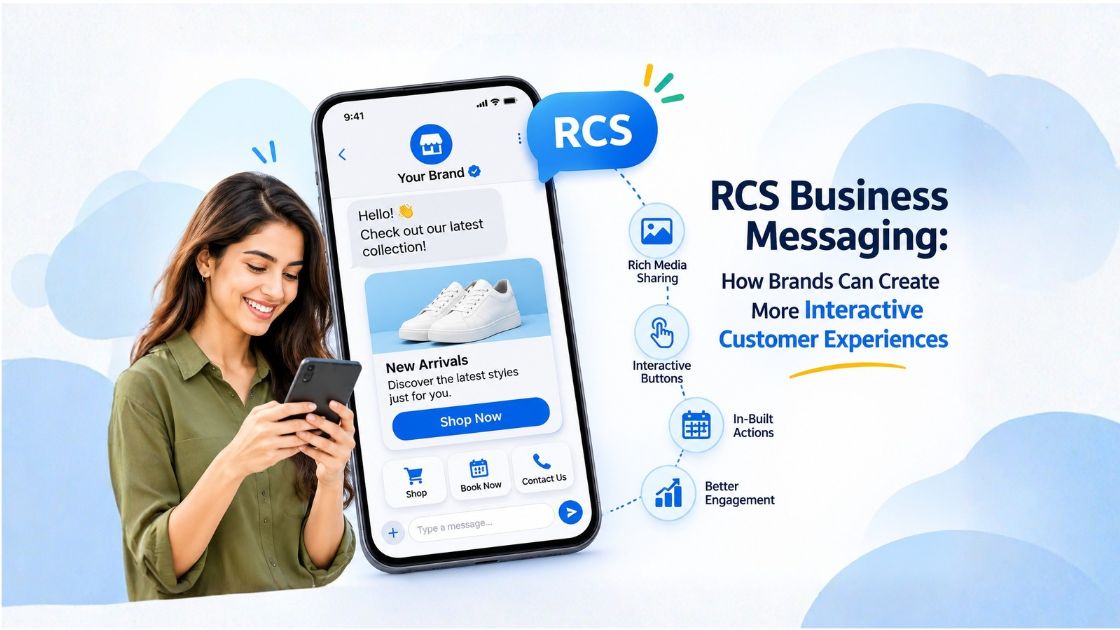
- Interactive messaging: Use quick reply buttons, call-to-action buttons, and interactive messages to simplify customer responses.
For instance, a healthcare provider can send appointment reminders and consultation instructions, while an educational institution can share admission updates and course information.
These timely interactions help customers receive the information they need without repeatedly contacting customer support.
How Can WhatsApp Business API Help Generate Leads and Increase Sales?
WhatsApp Business API supports the entire lead generation process, from the first customer enquiry to the final purchase.
Businesses can connect WhatsApp with their websites, landing pages, social media campaigns, and Click-to-WhatsApp advertisements. When potential customers click these entry points, they can start a conversation directly with the business.
Once a conversation begins, businesses can use automated workflows to understand customer requirements, collect enquiry details, and direct qualified prospects to the appropriate sales representative.
For example, a real estate company can ask visitors about their preferred location, property type, and budget before forwarding the enquiry to its sales team.
Similarly, businesses can use WhatsApp API for lead generation to capture enquiries, automate follow-ups, and improve lead management.
Other useful sales applications include:
- Sending product catalogues and service information.
- Following up with customers who have requested quotations.
- Sharing limited-period promotional offers with opted-in customers.
- Re-engaging customers who have shown interest but not completed a purchase.
- Providing payment links and purchase assistance where supported.
The key is to send relevant messages at the right stage instead of overwhelming customers with repeated promotional notifications.
How Does WhatsApp Automation Help Businesses Improve Sales?
Manual communication becomes difficult when a business receives hundreds or thousands of customer enquiries. WhatsApp automation helps manage repetitive conversations while allowing sales representatives to focus on important customer interactions.
Businesses can automate welcome messages, frequently asked questions, enquiry collection, appointment scheduling, and order-related notifications.
AI-powered WhatsApp chatbots can also understand customer questions, provide relevant answers using an approved knowledge base, and qualify leads based on predefined business requirements.
For example, an online electronics store can use a chatbot to help customers compare products, check availability, understand basic specifications, and connect with a sales representative when additional assistance is required.
E-commerce companies can also use automated WhatsApp workflows for abandoned cart reminders, product recommendations, order updates, and repeat-purchase campaigns. Explore how e-commerce brands use WhatsApp API to support customer communication and online sales.
Why Is CRM Integration Important for WhatsApp Business API?
Managing customer conversations separately from sales records can create communication gaps. CRM integration helps businesses bring WhatsApp conversations and customer information into a more organized workflow.
When WhatsApp Business API is connected with a CRM system, businesses can:
- Store customer enquiry details and conversation history.
- Assign incoming leads to specific sales representatives.
- Track follow-up activities and sales opportunities.
- Monitor customer interactions across different stages.
- Automate reminders and customer communication.
- Improve coordination between sales and customer support teams.
Consider a company receiving enquiries through its website, advertisements, and WhatsApp campaigns. With CRM integration, these enquiries can be organized in one system, helping the sales team identify interested prospects and follow up without missing important conversations.
Businesses looking to implement this workflow can understand WhatsApp API and CRM integration in greater detail.
How Different Industries Use WhatsApp Business API to Improve Engagement and Sales?
WhatsApp Business API is useful across industries because each business can create communication workflows based on its customers and services.
E-commerce and retail: Online stores can share product information, order confirmations, delivery notifications, payment updates, and personalized product recommendations.
Education: Colleges and universities can respond to admission enquiries, share course details, send application reminders, and communicate important admission updates.
For example, institutions can explore WhatsApp API for college admissions to understand how automated communication supports student enquiries.
Healthcare: Hospitals and clinics can send appointment confirmations, reminders, basic service information, and follow-up notifications while maintaining appropriate patient privacy.
Banking and financial services: Financial institutions can use approved WhatsApp communication workflows for transaction alerts, service notifications, and customer assistance, subject to applicable security and regulatory requirements.
Real estate: Property businesses can share project details, schedule site visits, answer buyer enquiries, and follow up with interested prospects.
For healthcare businesses, WhatsApp API for hospitals offers additional insights into appointment communication and patient engagement workflows.
How to Choose the Right WhatsApp Official API Provider in India?
Choosing the right WhatsApp Official API Provider is important for businesses that want reliable messaging, effective automation, and long-term scalability.
With businesses across Mumbai, Pune, Delhi, Bengaluru, Hyderabad, Chennai, Ahmedabad, and other Indian cities increasingly adopting digital communication, selecting a provider with the right technical capabilities can make implementation easier.
Before choosing a WhatsApp API service provider, consider these factors:
- Official WhatsApp Business Platform access: Check whether the provider offers legitimate access to Meta’s official platform.
- Easy API integration: Look for integration support with existing websites, mobile applications, CRM systems, and business software.
- Chatbot automation: Check whether the solution supports automated customer conversations, lead qualification, and human agent handover.
- Scalable messaging: Ensure the platform can support your expected messaging volume and business requirements.
- Analytics and reporting: Look for message delivery insights, read information, and campaign performance reporting.
- Technical support: Choose a provider that offers onboarding assistance, integration guidance, and ongoing technical support.
- Transparent pricing: Understand messaging charges, platform fees, implementation costs, and any additional service charges.
Businesses should also understand the available features and costs before implementation. This WhatsApp Business Platform pricing guide can help businesses evaluate their requirements.
How Can Businesses Get Started with WhatsApp Business API?
Getting started with WhatsApp Business API involves a few important steps:
- Identify your business communication requirements, such as customer support, lead generation, sales automation, or notifications.
- Choose a suitable WhatsApp Business API Provider.
- Complete the required Meta Business verification and WhatsApp account onboarding.
- Connect the API with your website, CRM, or existing business applications.
- Configure approved message templates, automated responses, and chatbot workflows.
- Test the complete communication process before launching campaigns.
- Monitor messaging performance and improve workflows based on customer interactions.
Businesses should follow WhatsApp’s messaging policies, obtain appropriate customer consent, use approved templates where required, and provide clear options for customers to manage their communication preferences.
Improve Customer Engagement and Sales with WhatsApp Business API
WhatsApp Business API is more than a business messaging tool. It helps businesses manage customer conversations, automate repetitive tasks, generate qualified leads, and build stronger customer relationships.
By combining personalized messaging, AI chatbots, CRM integration, and automated follow-ups, businesses can create better customer experiences and turn more enquiries into sales opportunities.
Choosing the right WhatsApp Business API Provider is equally important for reliable communication, seamless integration, and long-term business growth. Businesses should focus on solutions that match their communication needs and help them build meaningful customer relationships.
Frequently Asked Questions
What is the difference between WhatsApp Business App and WhatsApp Business API?
The WhatsApp Business App supports manual customer communication, while WhatsApp Business API offers advanced features such as chatbot automation, CRM integration, multiple agent access, and bulk business messaging.
Can WhatsApp Business API help increase online sales?
Yes. Businesses can use WhatsApp API for product recommendations, abandoned cart reminders, automated follow-ups, and order updates to encourage purchases and improve customer engagement.
How do WhatsApp AI chatbots help businesses?
WhatsApp AI chatbots answer common questions, collect customer details, qualify leads, and provide automated support. They can also transfer complex queries to human agents.
Can WhatsApp Business API integrate with CRM software?
Yes. WhatsApp API integration with CRM helps businesses manage customer conversations, track enquiries, assign leads, and automate sales follow-ups from one system.
How do I choose the right WhatsApp Business API Provider in India?
Look for official Meta platform access, reliable API integration, chatbot automation, CRM connectivity, transparent pricing, scalability, and responsive technical support.