
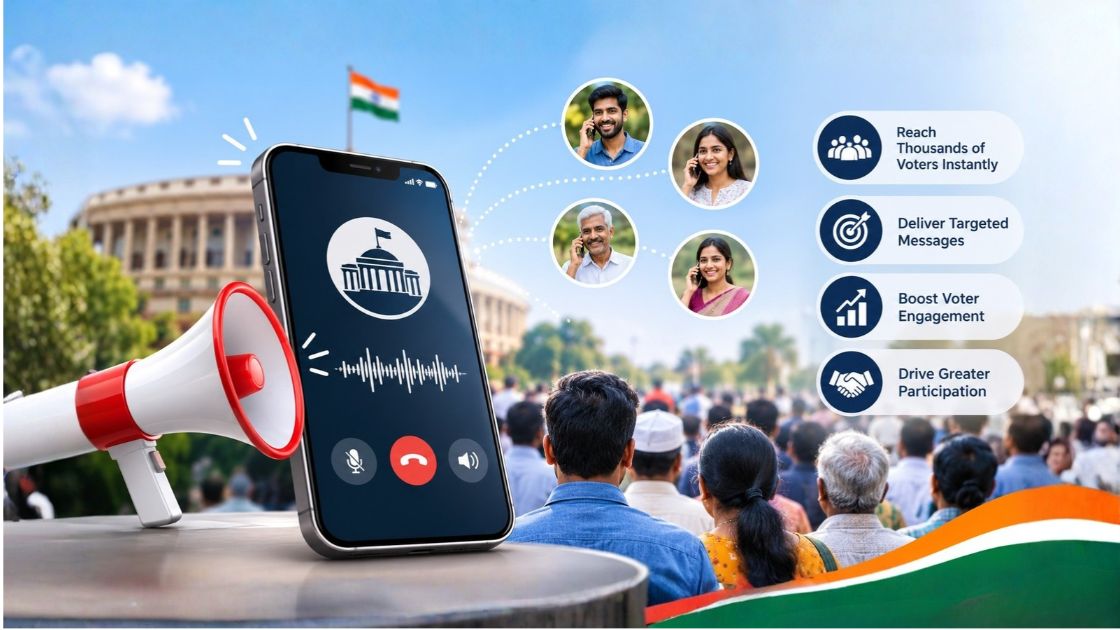



Summary – Election voice calls help political parties and candidates connect with thousands of voters through automated calls and pre-recorded messages. Campaign teams can use them to introduce candidates, announce public meetings, share important updates, and communicate campaign messages in regional languages. Working with a reliable Election Voice Call Service Provider makes it easier to manage large-scale voter outreach, reduce manual calling efforts, track campaign performance, and reach audiences across different locations.
Reaching voters consistently is one of the biggest challenges during an election campaign. Political parties and candidates need to share campaign updates, introduce their candidates, announce rallies, and communicate important messages across multiple locations. However, contacting every voter individually takes considerable time, effort, and resources.
Election voice calls offer a practical way to manage this communication at scale. Through automated outbound calling, campaign teams can deliver pre-recorded messages to large voter groups without depending entirely on manual phone calls. Messages can also be recorded in regional languages, helping campaigns communicate more naturally with people from different communities.
Whether a campaign needs to announce a public meeting in Maharashtra, share candidate information in Andhra Pradesh, or communicate election updates across multiple constituencies, bulk voice calling can make outreach faster and more organised.
Choosing the right Election Voice Call Service Provider also helps campaign teams manage calling lists, schedule voice broadcasts, monitor call reports, and coordinate communication more efficiently. When planned carefully and used in accordance with applicable election and telecom regulations, voice calls can become a useful part of a broader voter outreach strategy.
What Are Election Voice Call Services?
Election voice call services allow political parties and candidates to deliver recorded audio messages to large groups of people through automated outbound calling systems. Instead of asking campaign workers to contact every person individually, campaign teams can use bulk voice broadcasting to distribute approved messages through a centralized platform.
These services are useful for communicating candidate introductions, political announcements, public meeting schedules, campaign updates, and voter awareness information.
For example, a candidate contesting an election in Maharashtra may want to announce an upcoming public meeting in Pune or Pimpri-Chinchwad. A recorded Marathi voice message can communicate the event details to the intended audience without requiring individual calls.
Depending on the platform, election voice calling solutions may include automated outbound dialers (OBD), voice broadcasting, interactive voice response (IVR), campaign scheduling, and call reporting.
How Do Automated Election Voice Calls Work?
The process of running an automated election voice campaign generally involves a few straightforward steps:
- Record the campaign message: Prepare a short, clear voice recording containing the approved announcement or election-related information.
- Prepare contact information: Organize the authorized recipient list according to the campaign’s communication requirements.
- Configure the calling campaign: Upload the recording, select the appropriate audience, and configure campaign settings.
- Schedule voice calls: Set the permitted calling schedule and initiate the automated campaign.
- Monitor call reports: Review available information about attempted calls, answered calls, unsuccessful calls, and call duration.
This process helps campaign teams coordinate large-scale communication while reducing repetitive manual work.
How Do Election Voice Calls Help Political Campaigns Reach Voters at Scale?
Reaching voters across different locations can be challenging, particularly when campaign teams have limited time and resources. Automated political campaign calls provide another communication channel for sharing important information.
Here are some practical ways they support election outreach.
1. Reach Large Audiences Within a Short Time
Manual calling requires considerable coordination, especially when campaigns need to communicate across multiple areas. Bulk election voice calls simplify this process by allowing campaign teams to distribute recorded messages to large recipient groups through automated systems.
This can be useful when announcing public meetings, sharing approved campaign updates, or communicating schedule changes across different constituencies.
2. Communicate in Regional Languages
India’s linguistic diversity makes regional-language communication important for political outreach. A message that sounds natural and familiar is often easier for recipients to understand.
Campaign teams can prepare recordings in Hindi, Marathi, Telugu, Tamil, Bengali, Kannada, and other relevant languages, depending on their audience.
For example, a campaign operating in Maharashtra may use Marathi voice recordings for local communication, while a campaign in Andhra Pradesh may consider Telugu-language announcements.
3. Share Important Election Announcements
Voice calls provide a direct way to communicate event information and campaign announcements. Political organizations can use recorded messages to share details about authorized public meetings, candidate introductions, and other relevant updates.
Unlike text messages, voice recordings communicate through spoken language, making the message accessible to people who may prefer listening over reading.
4. Reduce Repetitive Manual Calling
Campaign workers often spend considerable time making similar announcements and sharing routine updates. Automated voice broadcasting can handle repetitive message delivery, allowing campaign teams to focus on event coordination, public interaction, and other responsibilities.
For example, understand how automated calls reduce costs through streamlined communication workflows.
5. Coordinate Communication Across Multiple Locations
Political campaigns may involve several constituencies, local teams, and regional communication requirements. A centralized voice calling platform can help organize separate campaigns, manage recordings, and monitor communication activities.
This makes bulk outbound voice calls useful for organizations coordinating election-related announcements across multiple locations in India.
Why Are Political Campaigns Using Outbound Voice Calling?
Voice communication offers certain advantages over text-only outreach. Recipients can hear the message directly, understand its tone, and receive information without needing an internet connection or messaging application.
Some of the main reasons include:
- Direct communication: Recorded messages reach recipients through their mobile phones.
- Consistent messaging: The same approved recording can be distributed across the intended audience.
- Operational efficiency: Automated dialing reduces the need for repetitive manual calls.
- Regional accessibility: Local-language recordings support communication across diverse communities.
- Campaign monitoring: Available reports help teams review calling activity and delivery outcomes.
How Can Campaign Teams Make Election Voice Calls More Effective?
Technology alone does not guarantee effective communication. The quality, relevance, and timing of a recorded message also matter.
Campaign teams should follow these practical strategies:
- Keep recordings short and clear: Focus on one main announcement instead of combining multiple unrelated messages.
- Use familiar language: Choose the language and terminology that the intended audience understands comfortably.
- Maintain good audio quality: Avoid background noise, unclear pronunciation, and unnecessarily fast speech.
- Organize campaign information: Verify names, event locations, dates, and other details before recording the final message.
- Monitor campaign reports: Review available call outcomes instead of considering every attempted call a successful communication.
- Plan communication responsibly: Avoid excessive calling and follow applicable campaign timing restrictions.
These practices help maintain clarity and make automated voice broadcasting easier to manage.
What Should You Look for in an Election Voice Call Service Provider in India?
Choosing the right Election Voice Call Service Provider is an important decision for political parties, campaign managers, and election communication agencies. A suitable provider should offer the technical capabilities required to manage bulk calling campaigns efficiently.
Consider the following factors before selecting a service provider:
- Bulk calling capacity: Check whether the platform can handle your expected call volume and campaign schedule.
- Regional-language support: Look for options to deliver clear recordings in relevant Indian languages.
- Automated outbound dialer: Evaluate its ability to initiate and manage bulk voice calls.
- Campaign scheduling: Check whether you can configure permitted calling windows and manage different campaigns.
- Call reports: Review the availability of attempted, answered, and failed call information.
- Technical support: Ensure assistance is available when configuring or monitoring campaigns.
- Transparent pricing: Understand billing based on call attempts, connections, duration, and additional features.
- Compliance awareness: Check whether the provider understands applicable election advertising and telecom requirements.
Political campaign teams comparing service providers across India can also refer to guide on choosing the right provider.
What Are the Compliance Requirements for Election Voice Calls in India?
Large-scale political communication must be planned responsibly. The Election Commission of India (ECI) has issued instructions covering the pre-certification of political advertisements on electronic media, including bulk SMS and recorded voice messages used for election campaigning.
Depending on the election and communication, campaign organizers should verify the applicable Media Certification and Monitoring Committee (MCMC) requirements, Model Code of Conduct provisions, and restrictions during the 48-hour silence period.
Campaign teams should also review relevant TRAI requirements, sender identification, recipient-data practices, and applicable telecom rules before launching automated voice calls.
Importantly, hiring a voice calling provider does not transfer the campaign’s responsibility for its content or regulatory compliance.
Understand this election campaign compliance checklist before planning bulk SMS or voice communication.
Reach More Voters With Better-Planned Voice Campaigns
Connecting with voters across multiple locations requires clear communication, careful planning, and reliable calling technology. Automated election voice calls can help political parties and candidates share campaign announcements, introduce candidates, communicate event details, and reach larger audiences without depending entirely on manual calling.
Choosing an experienced Election Voice Call Service Provider can make it easier to manage bulk calling, regional language recordings, campaign schedules, and performance reports. If your campaign is planning large-scale voter outreach, explore a reliable voice broadcasting solution and choose a service that supports your communication requirements and applicable compliance standards.
Frequently Asked Questions
What are election voice calls?
Election voice calls are automated outbound calls that deliver pre-recorded messages to selected audiences. Political campaigns use them to share candidate introductions, rally announcements, campaign updates, and public information.
How do automated voice calls help political campaigns?
They help campaigns communicate with large audiences, reduce repetitive manual calling, share consistent messages, and reach people in different regions through local-language recordings.
Can election voice calls be made in regional languages?
Yes. Campaign teams can prepare recordings in languages such as Hindi, Marathi, Telugu, Tamil, Kannada, and Bengali, depending on the platform's language and recording support.
What should I look for in an Election Voice Call Service Provider?
Look for bulk calling capacity, reliable infrastructure, regional language support, campaign scheduling, call reports, technical assistance, and an understanding of applicable election and telecom regulations.
Are automated election voice calls permitted in India?
Political campaign calls must comply with applicable election and telecom rules. Campaign organisers should verify current requirements, including permissions, applicable restrictions, and silence-period rules, before starting a campaign.